Unifloral honey
Tupelo honey
Tupelo honey comes from the nectar of Ogeechee tupelo, a small tree of river swamps from the Ogeechee valley in Georgia to the Florida panhandle. It is known for a fructose content well above glucose, which keeps it from granulating. Pollen analysis of Florida samples confirmed most as authentic, and a short spring bloom limits the harvest.
What we know
Origin and plant
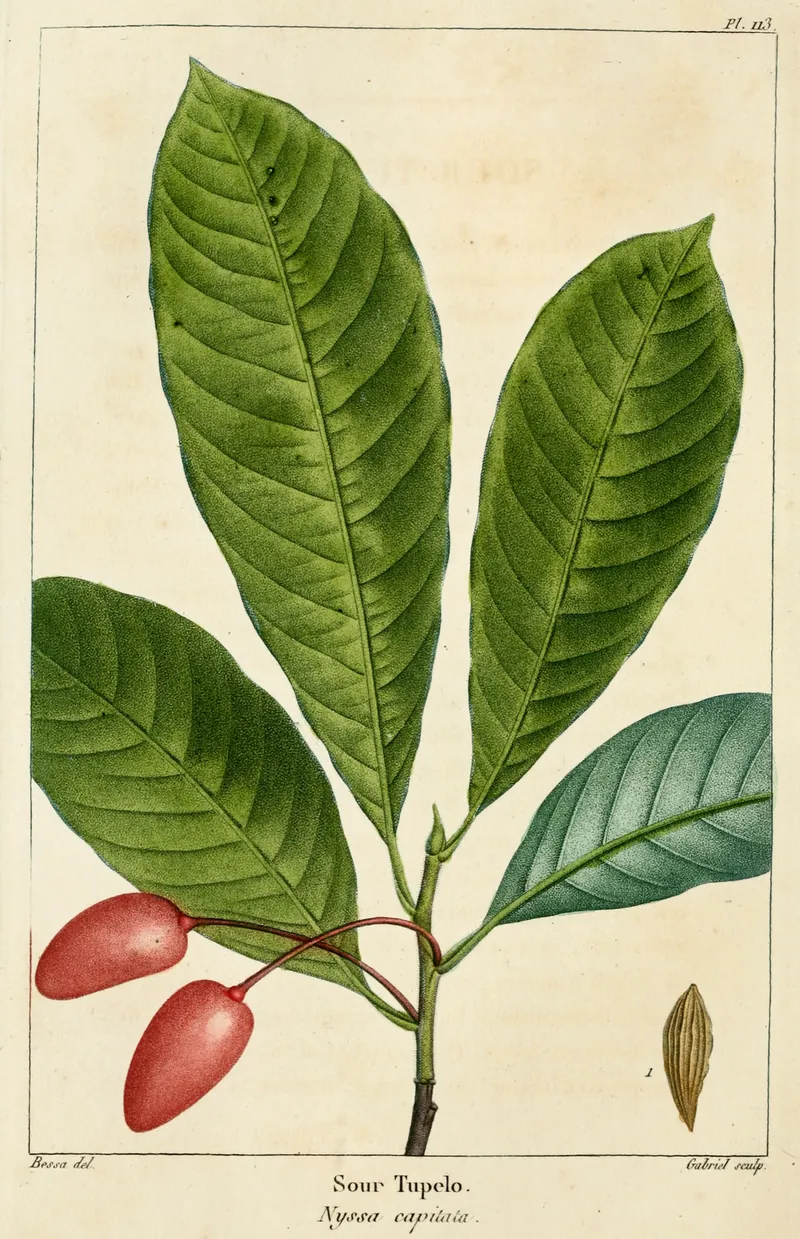
Ogeechee tupelo grows along the borders of rivers, swamps and ponds that are frequently flooded, from the Ogeechee valley in Georgia to Clay County and Washington County in Florida.
Confirmed fact[1]It is most often a small, crooked tree 7.6 to 10.7 m tall, and its flowers appear from late March to early May after the new leaves have fully grown.
Confirmed fact[1]The USDA Woody Plant Seed Manual places the tupelos in the family Nyssaceae and lists Ogeechee tupelo under the names Ogeechee-lime, sour tupelo, sour tupelo-gum and white tupelo.
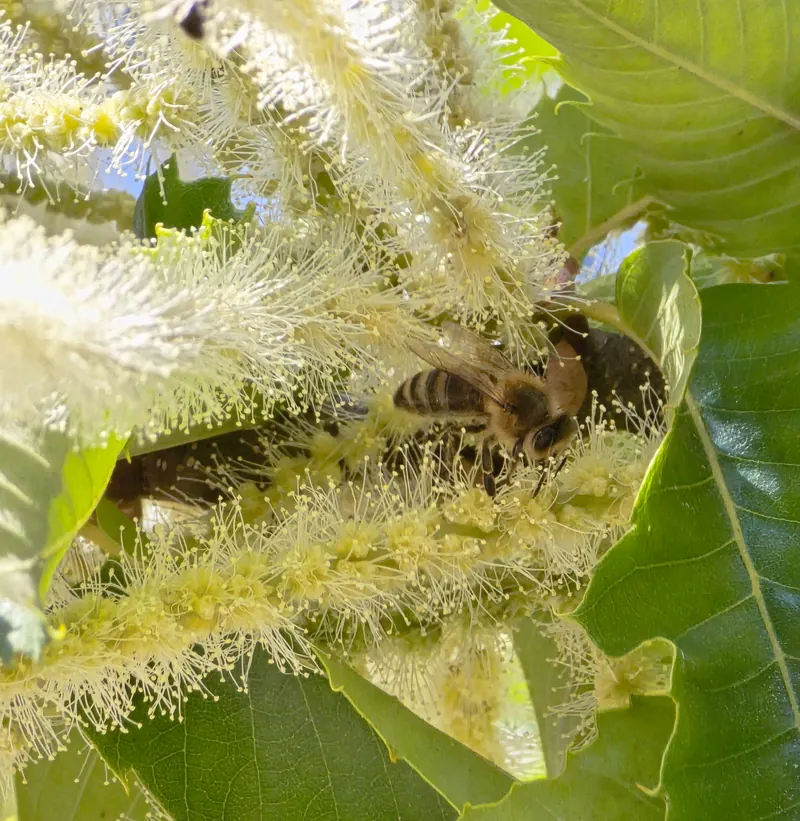
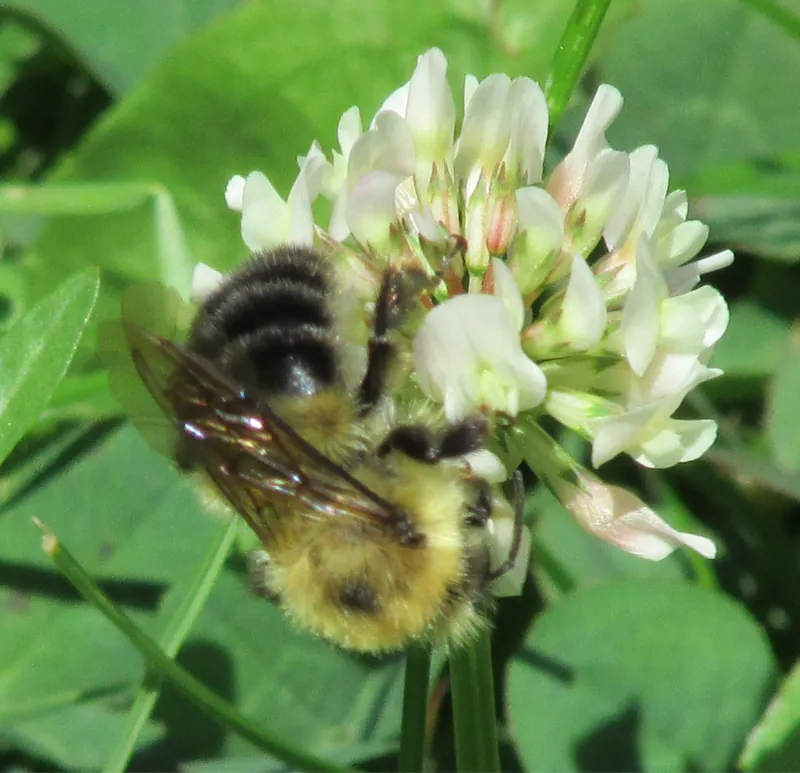
Confirmed fact[2]Ogeechee tupelo is an important honey tree: bees use its nectar to make tupelo honey, and the male flowers in particular produce abundant nectar.
Confirmed fact[1]
How to recognise it
Pollen analysis of the Florida samples by Texas A&M University found that nine of ten could be considered authentic tupelo honeys.
Confirmed fact[3]The same study proposed (E)-beta-damascenone as a possible marker compound to distinguish tupelo honey from other unifloral honeys.
Reported by the farm[3]
Composition
Ten Florida panhandle samples had fructose from 41.48 to 45.46 percent (average 43.57) and glucose from 25.87 to 28.58 percent (average 27.28).
Confirmed fact[3]
Crystallisation and storage
The Illinois thesis, citing White et al. (1962), describes tupelo honey as non-granulating because of its higher than average fructose content.
Confirmed fact[3]Eva Crane cited tupelo as an example of a non-granulating honey containing much more fructose than glucose, 67 percent more.
Confirmed fact[4]
Production
Thousands of hectares of Ogeechee tupelo have been planted for bee farms along the lower Apalachicola River.
Confirmed fact[1]In the Florida panhandle the tupelo bloom lasts only a few weeks, from mid April to mid May in normal conditions, and the honey can command high prices.
Reported by the farm[3]A University of Florida IFAS Extension agent for Gulf County describes the tupelo bloom season as lasting from about mid April to the end of May.
Reported by the farm[5]
Honey Odyssey describes composition, origin and tradition. It does not give medical advice or health claims.
Continue
Sources
- Kossuth S.V., Scheer R.L. (1990) Nyssa ogeche Bartr. ex Marsh., Ogeechee tupelo. In: Burns R.M., Honkala B.H. (eds) Silvics of North America, Vol. 2, Hardwoods. Agriculture Handbook 654, USDA Forest Service, Washington DC (copy hosted by Virginia Tech Dendrology) Link
- Bonner F.T. (2008) Nyssa L., tupelo. In: Bonner F.T., Karrfalt R.P. (eds) The Woody Plant Seed Manual, Agriculture Handbook 727, USDA Forest Service Link
- Gardiner S.R. (2015) Physicochemical and flavor characterization of Tupelo honey. MSc thesis, Food Science and Human Nutrition, University of Illinois at Urbana-Champaign Link
- Crane E. (1982) Learning about honey through fructose. Bee World 63(4), 174-177 (International Bee Research Association; copy hosted by the Eva Crane Trust) Link
- Bodrey R. (2016, updated 2021) Tupelo Honey: Rich in Local History and Medicinal Value. UF/IFAS Extension Franklin County blog, University of Florida Link
Last checked: 30 October 2026. Every statement on this page was compared with the source it cites.