Honey Odyssey

A small bee.
A whole world.

A visual encyclopedia of bees, plants, apiaries and honey. Every fact leads to its source.
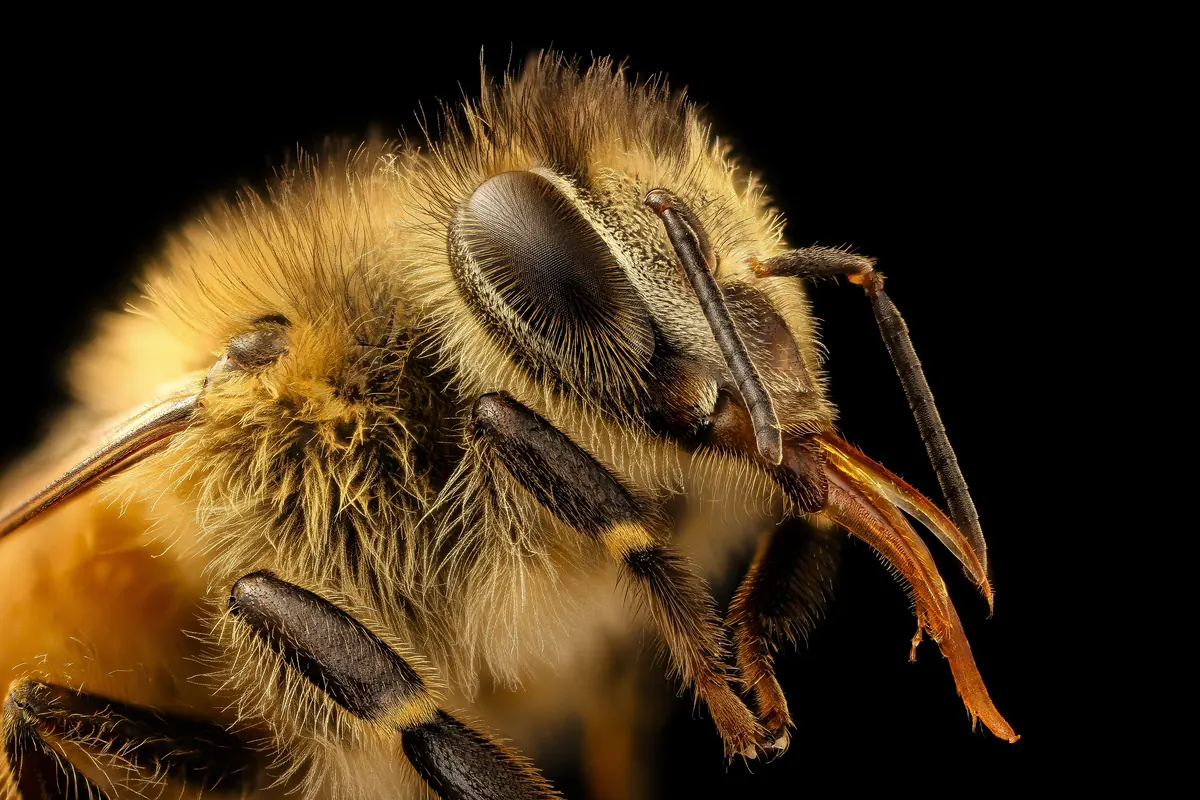
Close-up of a western honey bee's head in profile: compound eye, antennae and golden hair against black.
SpecimenApis mellifera, workerImageFocus-stacked photograph, USGS Bee Inventory and Monitoring LabRightsPublic domain

The journey

From flower to honey

Honey is made twice: once by the plant, and again inside the hive. Follow one load of nectar.

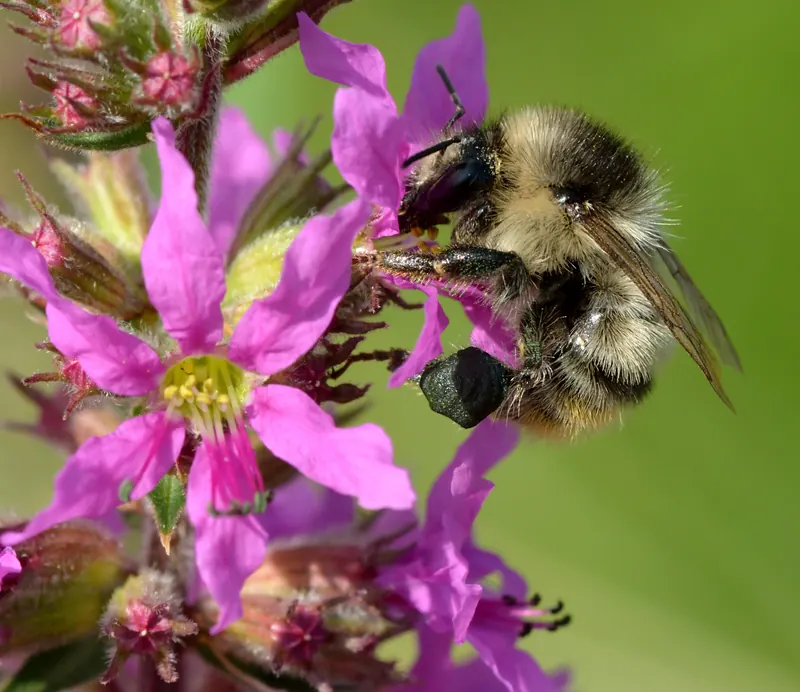
A shrill carder bee on purple loosestrife. Photo: Ivar Leidus, CC BY-SA 4.0
Secrete

A flower offers nectar

Specialised tissues called nectaries secrete nectar, a solution of sugars in water. Its sugar concentration varies widely between plants, from about 7% to 70% by weight.
Confirmed fact[1]
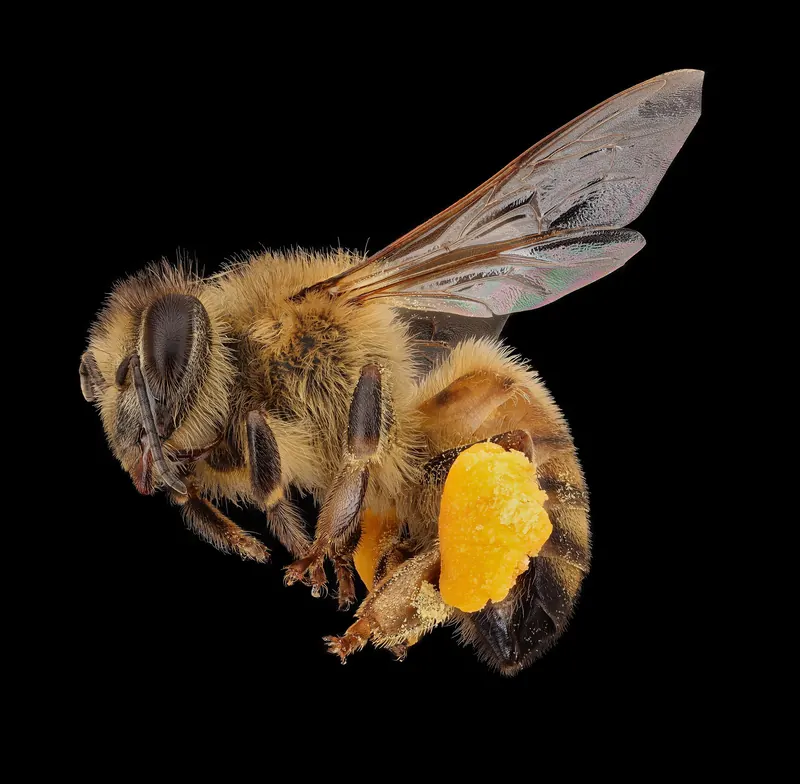
Honey bee worker with a pollen load on the hind leg. USGS BIML, public domain
Collect

A forager fills its honey stomach

A worker draws up nectar through its proboscis, a tube for sucking up liquids, and carries it home in its honey stomach. Pollen travels separately, packed into baskets on the hind legs.
Confirmed fact[2]
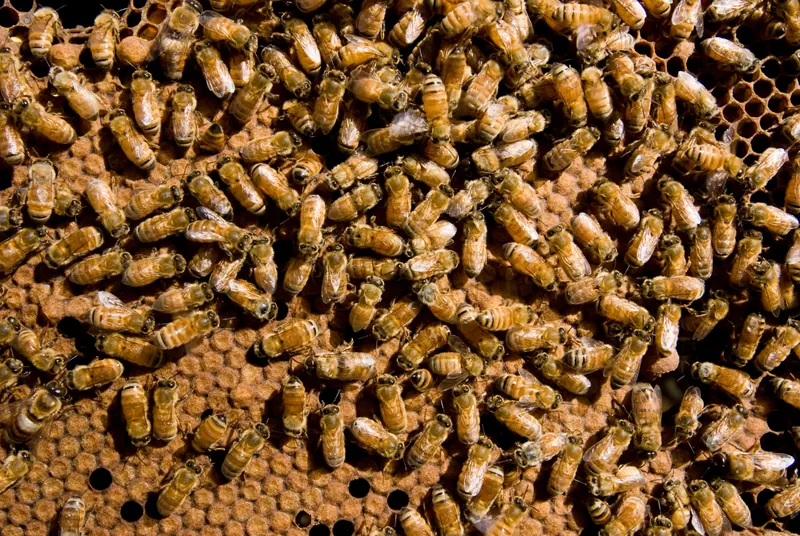
Honey bees on brood comb. Photo: Nick Pitsas, CSIRO, CC BY 3.0
Pass on

The load changes hands

Back at the hive, the forager hands the nectar to a house bee, who places it in an empty cell or adds it to a partly filled one.
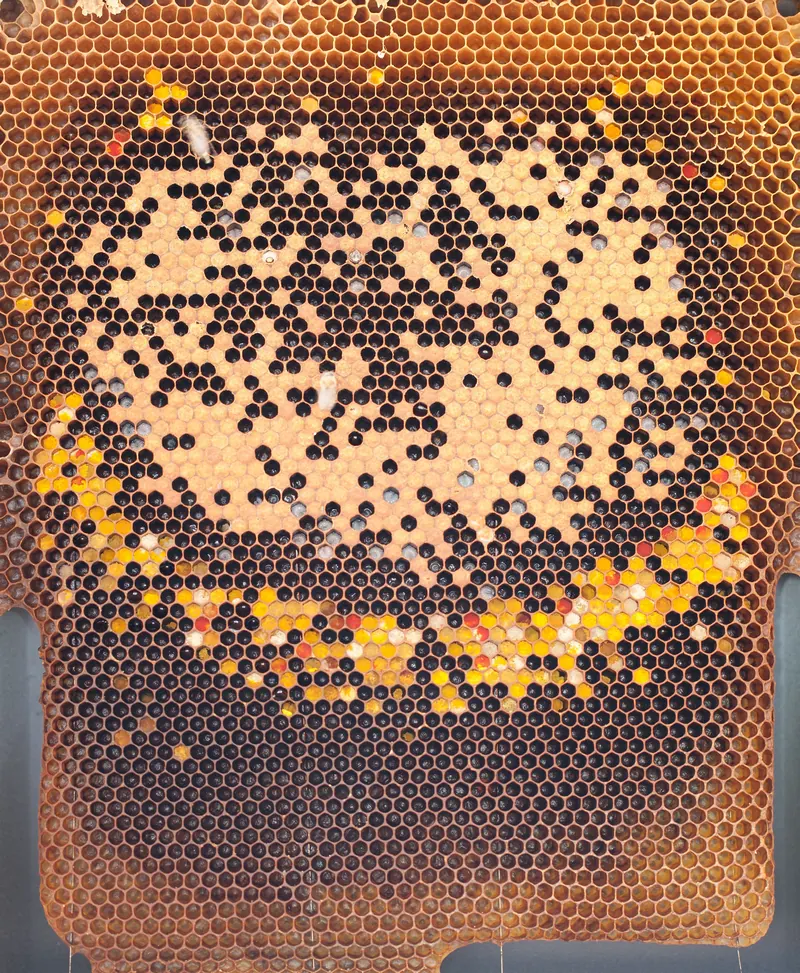
Confirmed fact[3]
A comb with brood in the centre and stores around it. Photo: Joska16, CC BY-SA 4.0
Ripen

Water leaves, enzymes arrive

Bees add enzymes that are needed to mature the honey, and evaporate water from it. FAO notes that about half the water in nectar collected during the day evaporates during the night.
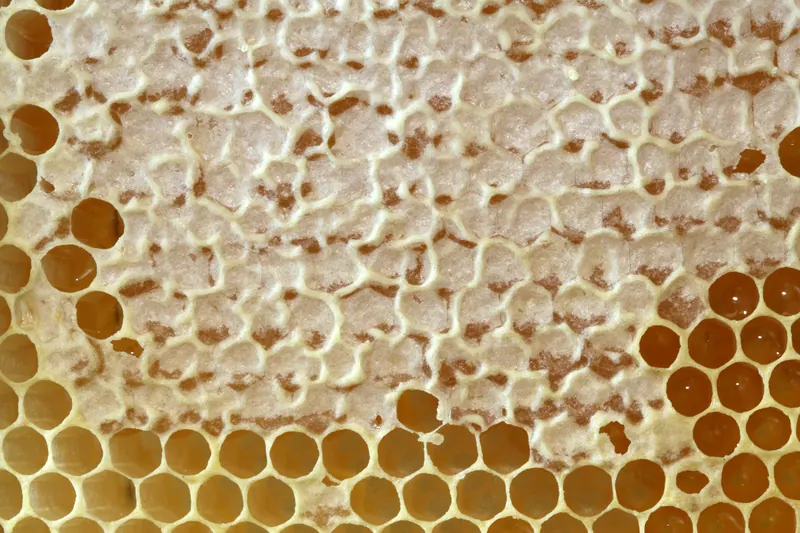
Confirmed fact[3]
Capped honey, with a few open cells below. Photo: Waugsberg, CC BY-SA 3.0
Seal

Ripe honey is capped with wax

Workers make wax in four sets of glands on the underside of the abdomen. With it they build the comb and seal the ripe honey in.

Confirmed fact[3]
Define

Honey, by international standard

“The natural sweet substance produced by honey bees from the nectar of plants or from secretions of living parts of plants or excretions of plant sucking insects…”

The Codex Alimentarius standard caps moisture at 20% for most honeys and 23% for heather honey (Calluna). Not all honey starts in a flower: honeydew honey comes mainly from the excretions of plant-sucking insects.

Confirmed fact[4]

Inside the hive

A brood comb is a map of the colony's needs. Choose a cell type to see where the bees put it.

Schematic brood comb Capped brood in the centre, surrounded by open brood and eggs, a band of pollen, nectar, and capped honey towards the top. Drone brood in the lower corners and a queen cell hanging from the bottom edge.

Illustration: Honey Odyssey, schematic.
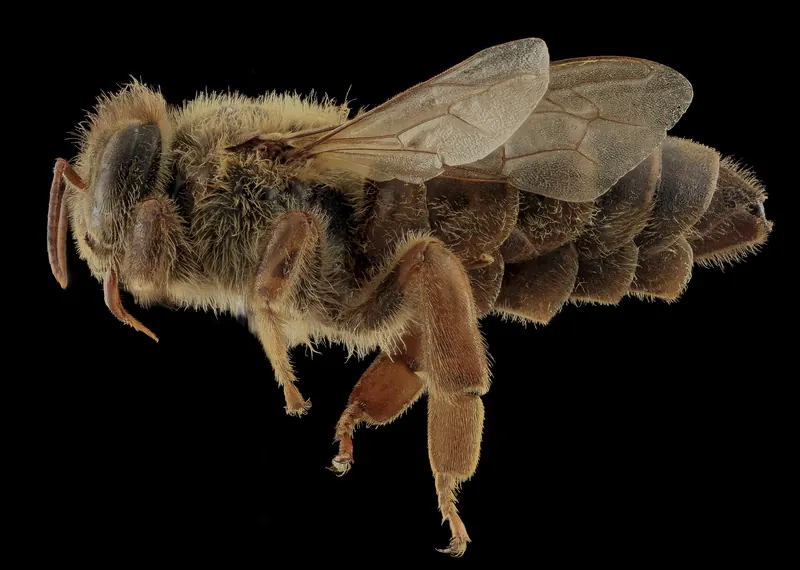
Honey bee queen, side view. USGS BIML, CC BY 2.0
Queen

16days from egg to adult

The only egg-laying female in a typical colony.

Honey bee queen, side view. USGS BIML, CC BY 2.0

Honey bee worker, side view. USGS BIML, public domain

Worker

21days from egg to adult

Females that build, clean, feed, guard and forage.

Honey bee worker, side view. USGS BIML, public domain
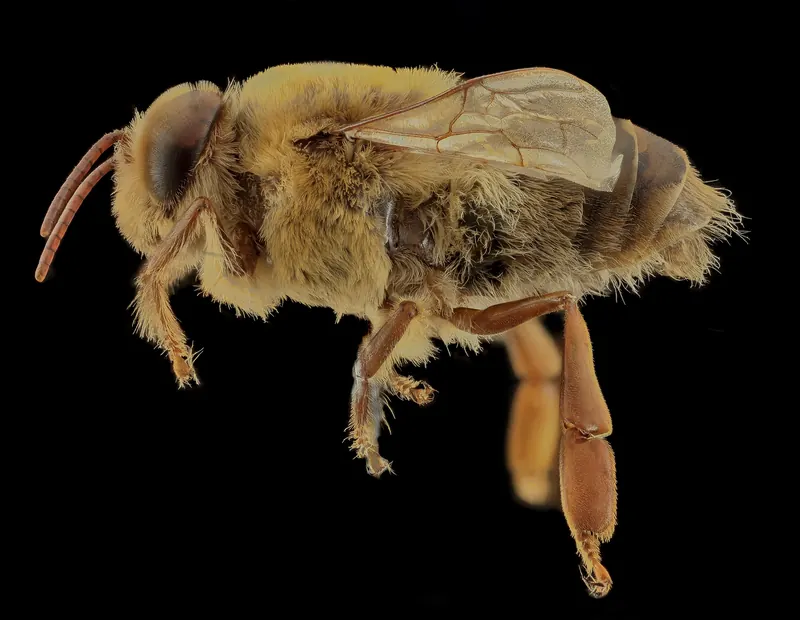
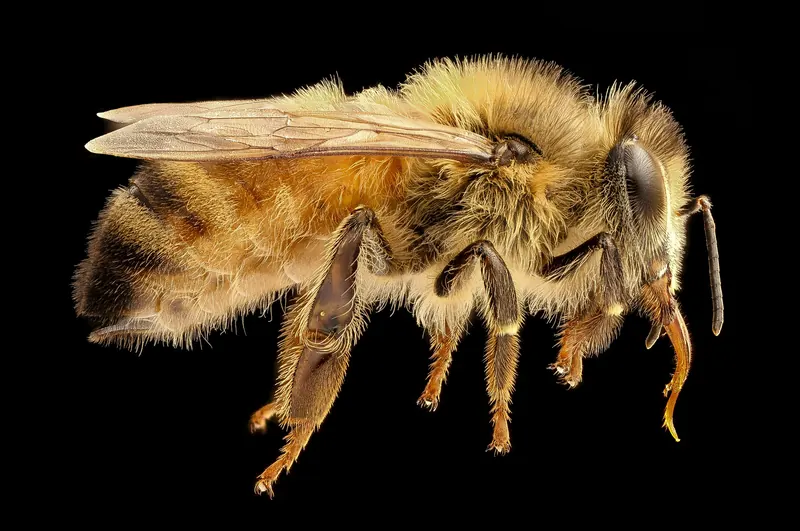
Honey bee drone, side view. USGS BIML, CC BY 2.0

Drone

24days from egg to adult

Males. Their large eyes meet at the top of the head.

Honey bee drone, side view. USGS BIML, CC BY 2.0

Confirmed fact[3]

Most bees never live in a hive

20,000+

described bee species, in seven families. Confirmed fact[14]

The vast majority are solitary: a single female builds and provisions her own nest, most often in the ground, sometimes in wood or a hollow stem.

Confirmed fact[15] Confirmed fact[16]
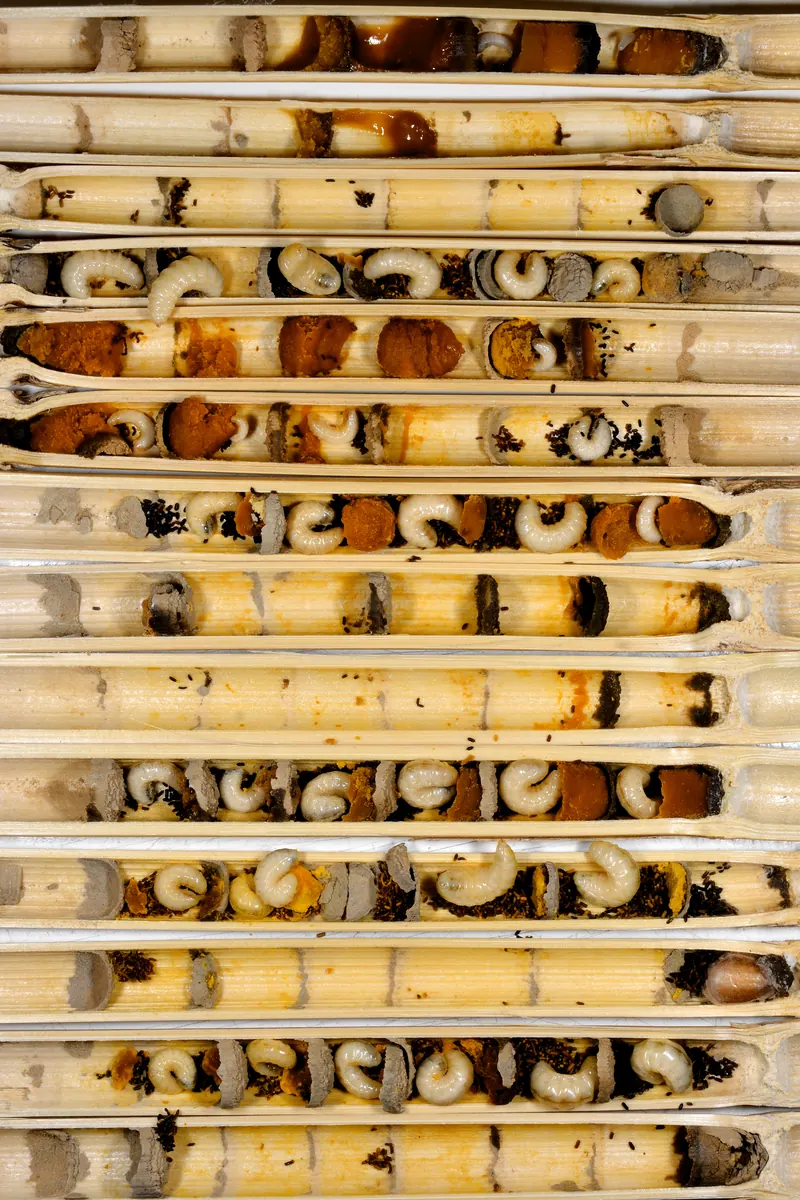
Opened nesting tubes of mason bees: rows of chambers with cocoons and pollen, separated by mud walls.
Opened nest tubes of mason bees (Osmia). Photo: Gilles San Martin, CC BY-SA 2.0
Apis mellifera, Western honey bee
Apis melliferaWestern honey bee

Lives in perennial colonies that store honey to get through seasons without flowers.

Colony in a cavity or hive Confirmed fact[8]
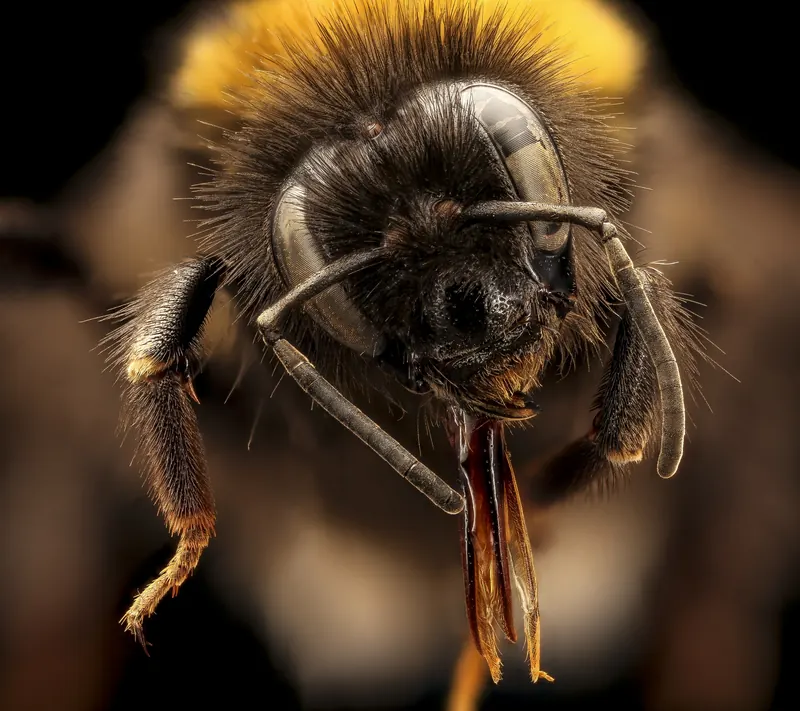
Bombus terrestris, Buff-tailed bumblebee
Bombus terrestrisBuff-tailed bumblebee

This specimen comes from New Zealand, where bumblebees were introduced from England in 1885 and 1906.

Annual colony Confirmed fact[9]
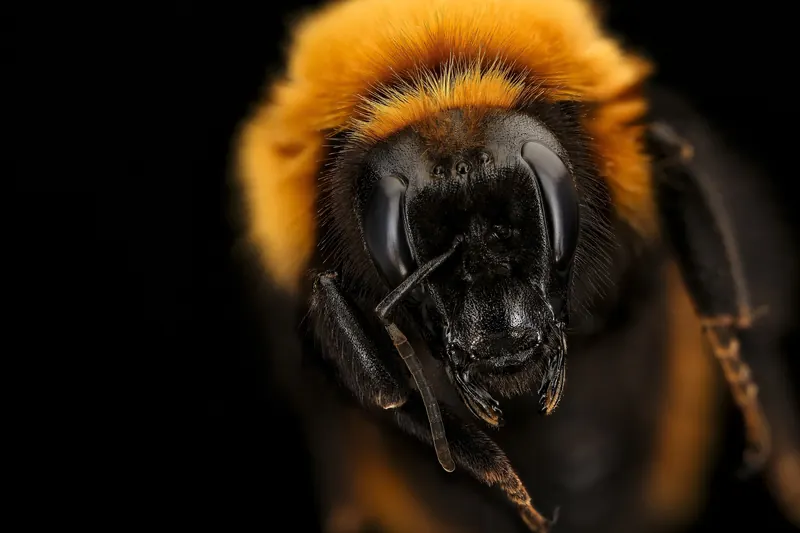
Bombus dahlbomii, Giant bumblebee
Bombus dahlbomiiGiant bumblebee

Native to Chile and Argentina; rated Endangered in Chile's national classification of species (2015).

Annual colony Confirmed fact[10]
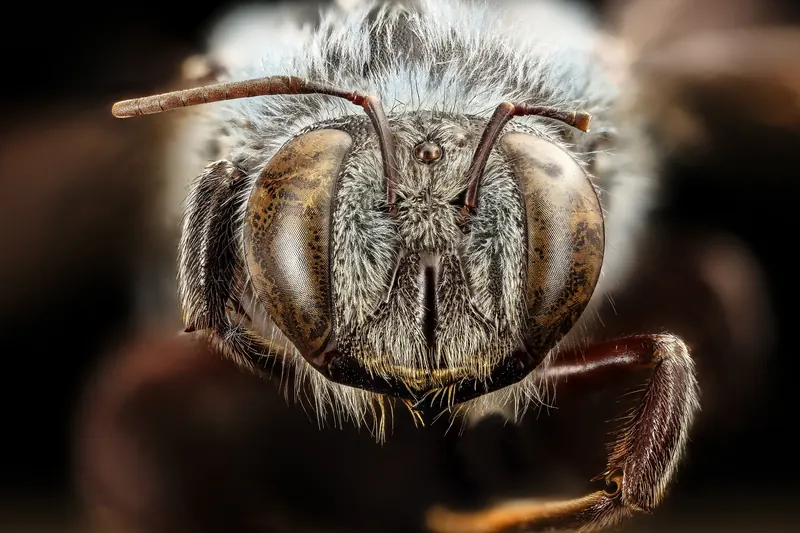
Xylocopa caerulea, Blue carpenter bee
Xylocopa caeruleaBlue carpenter bee

Carpenter bees chew their nest tunnels into dead wood.

In wood Confirmed fact[11]
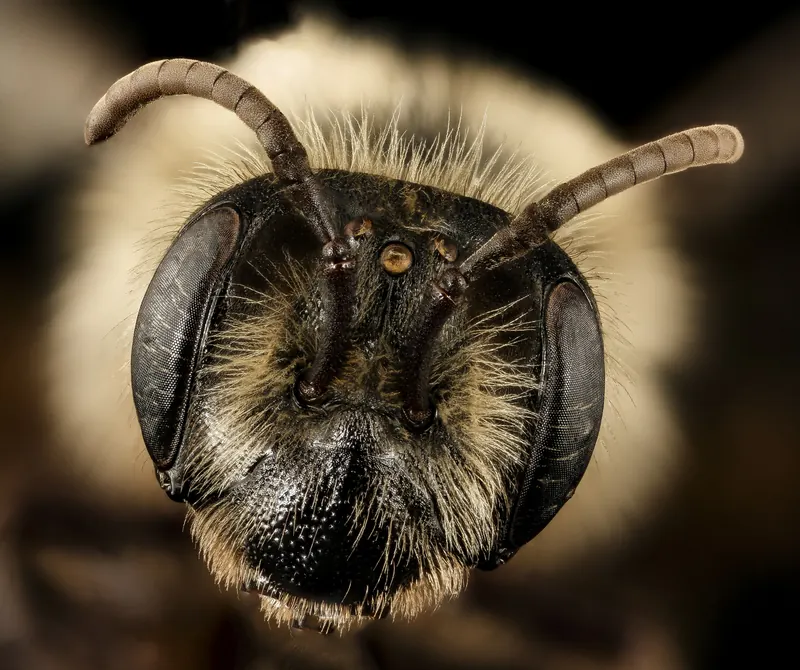
Andrena vicina, Mining bee
Andrena vicinaMining bee

Mining bees dig their nests in soil.

In the ground Confirmed fact[11]
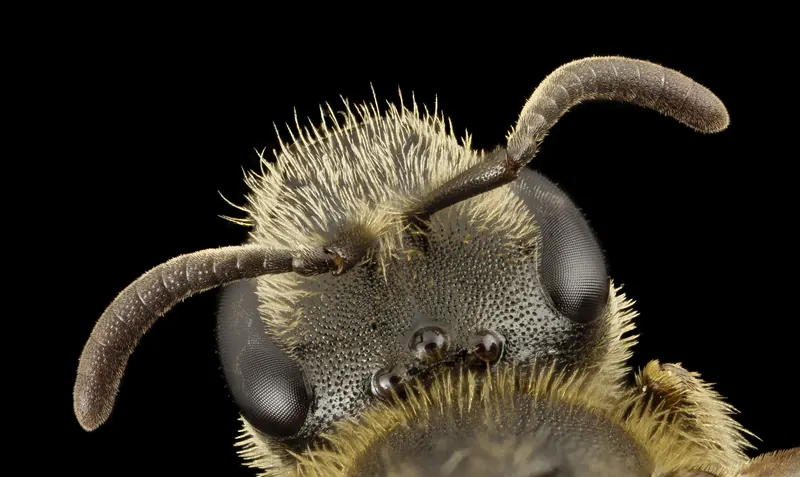
Lasioglossum albipes, Sweat bee
Lasioglossum albipesSweat bee

Some populations live socially, others solitarily.

In the ground Confirmed fact[12]
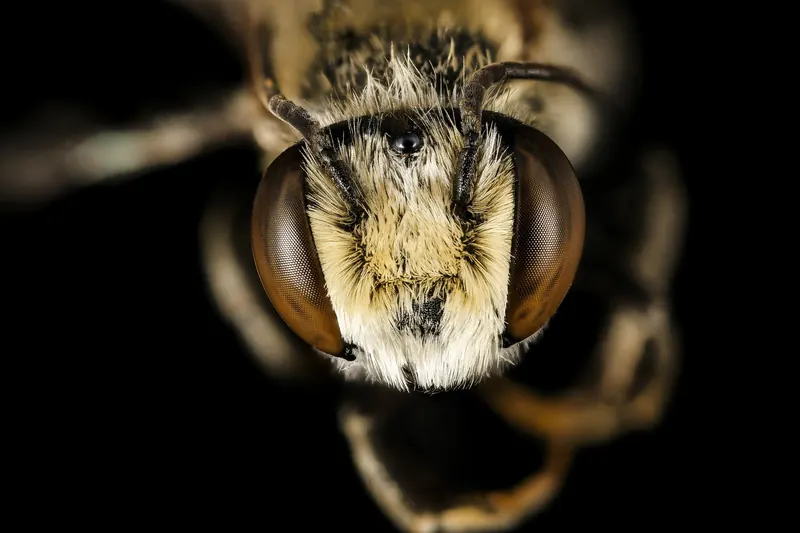
Megachile sp., Leafcutter bee
Megachile sp.Leafcutter bee

Many species line their nest cells with pieces cut from leaves.

In cavities Confirmed fact[11]
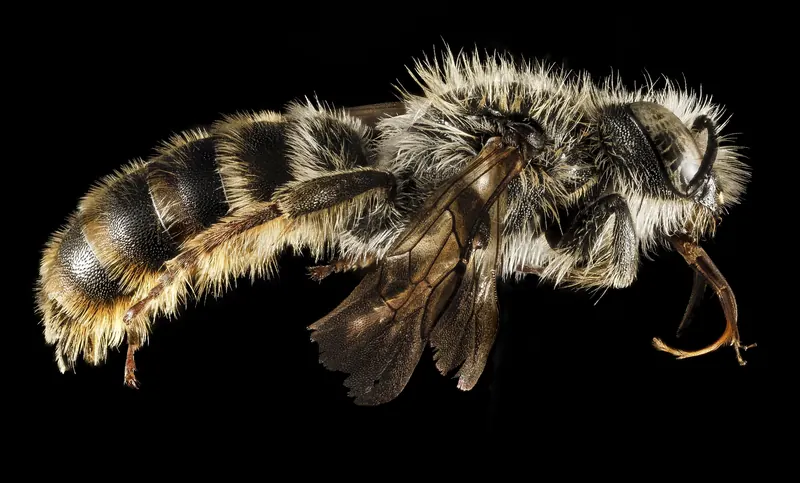
Osmia rufohirta, Mason bee
Osmia rufohirtaMason bee

Builds its nest inside empty snail shells.

In snail shells Confirmed fact[13]
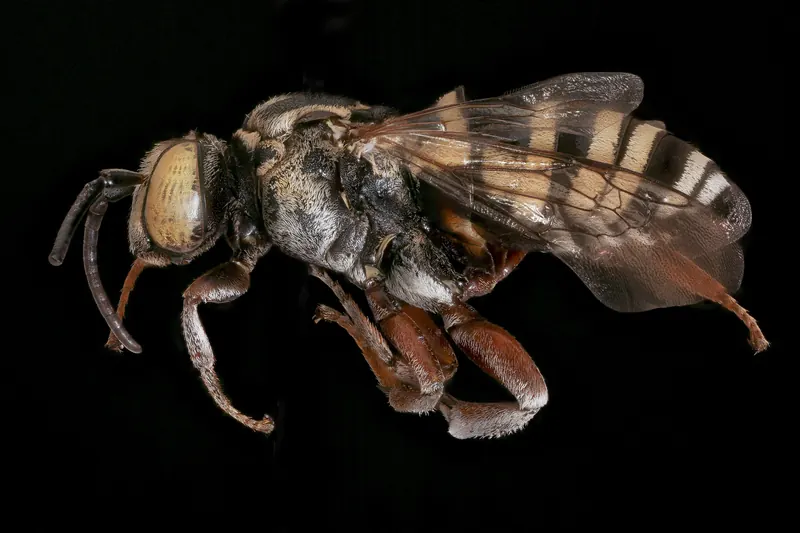
Triepeolus subnitens, Cuckoo bee
Triepeolus subnitensCuckoo bee

Collects no pollen. It lays its eggs in the nests of other bees.

In other bees' nests Confirmed fact[11]
Specimen photographs: USGS Bee Inventory and Monitoring Lab, public domain. See all 25 species

The bee world in numbers

Each figure shows its unit, territory, year and source. We only show what can be counted.

101.7 million

beehives in the world. Statistical estimate[17]

Unit
beehives (number)
Territory
World
Year
2024
Status
FAO estimate
Source
FAOSTAT
Retrieved
19 October 2026
Beehives in the world, 1961 to 2024World beehives rose from about 49.2 million in 1961 to 101.7 million in 2024.0M25M50M75M100M196119802000202449.2M101.7M

Source: FAOSTAT, Crops and livestock products (QCL), item “Bees”, element “Stocks”. World figures are FAO estimates.

FAOSTAT counts beehives. A hive is not a colony, an apiary or a beekeeper, and these figures do not replace each other.

1.96 million

tonnes of natural honey produced, world, 2023

Confirmed fact[17]

FAOSTAT, official figure.

64.5 thousand

tonnes of beeswax produced, world, 2024

Statistical estimate[17]

FAOSTAT, FAO estimate.

0

apiaries verified in the Honey Odyssey catalogue

The first five documentary stories are in preparation. This number will only grow with checked entries.

How many bees are on Earth?

We do not show a running counter. No recognised method counts every wild and managed bee, and an invented number would teach the wrong thing.

Data layers

Where the hives are

Beehives and honey production by country, from the latest year each country reported to FAO.

Loading map

Most beehives

FAOSTAT, latest reported year

    A country without colour has no FAOSTAT figure for this item. That is a gap in reporting, not proof that there are no hives.

    Each country shows its latest reported year. Status follows FAO flags: official figure, estimate or imputed value.

    The species layer counts the bees from our catalogue with at least 5 GBIF records in a country. Records show where a bee was found, not its full range. Select a country to see the species.

    Statistical estimate[17]

    How we know what we show

    Every checkable statement leads to a source that actually supports it. The reader should always see what kind of knowledge they are looking at.

    • Sources first. Official statistics, museums, universities and peer-reviewed studies come before anything else.
    • No invented numbers. If a figure cannot be measured, we explain why instead of estimating it for effect.
    • Words with care. We use “migration” only where it describes the phenomenon studied, and never transfer honey bee biology to all bees.
    • No health promises. Traditions and taste are kept apart from health claims, and we do not publish medical promises without solid evidence.
    • Visible corrections. Every article lists its author, review date and a history of significant changes.
    • Confirmed fact

      Supported by official statistics, scientific institutions or peer-reviewed research.

    • Statistical estimate

      A statistical or modelled figure, shown with its year and method.

    • Observation

      A record of something seen at a place and time. It confirms presence, not abundance.

    • Reported by the farm

      Information given by an apiary or company, not independently verified.

    • Open question

      A hypothesis or an open question that research has not settled.

    Sources

    1. Nicolson, S.W., Nepi, M. & Pacini, E. (eds) (2007). Nectaries and Nectar. Dordrecht: Springer. Chapter 1, Introduction (Pacini, E. & Nicolson, S.W.), pp. 1-18. Link
    2. Adjare, S.O. (1990). Beekeeping in Africa. FAO Agricultural Services Bulletin 68/6. Rome: FAO. Chapter 3, Anatomy of the honeybee. Link
    3. Adjare, S.O. (1990). Beekeeping in Africa. FAO Agricultural Services Bulletin 68/6. Rome: FAO. Chapter 2, Colony life and social organization. Link
    4. Codex Alimentarius Commission. Revised Codex Standard for Honey, CODEX STAN 12-1981, Rev. 1 (1987), Rev. 2 (2001). FAO/WHO. Sections 2.1, 2.1.2 and 3.4. Link
    5. Camazine, S. (1991). Self-organizing pattern formation on the combs of honey bee colonies. Behavioral Ecology and Sociobiology 28: 61-76. Link
    6. Seeley, T.D. & Morse, R.A. (1976). The nest of the honey bee (Apis mellifera L.). Insectes Sociaux 23: 495-512. Link
    7. Ellis, J.D. (2015). Field guide to beekeeping: the components of a honey bee nest. American Bee Journal 155(7): 741-745. University of Florida Honey Bee Research and Extension Laboratory. Link
    8. Cressman, A., Boyle, N. & Amsalem, E. (updated 2024). The Bumble Bee Lifestyle. Penn State Extension, Department of Entomology. Link
    9. Goulson, D. & Hanley, M.E. (2004). Distribution and forage use of exotic bumblebees in South Island, New Zealand. New Zealand Journal of Ecology 28(2): 225-232. Link
    10. Ministerio del Medio Ambiente, Chile (2015). Ficha de antecedentes de especie: Bombus dahlbomii. Reglamento de Clasificacion de Especies Silvestres, 12th process. Link
    11. Michener, C.D. (2007). The Bees of the World, 2nd edition. Baltimore: Johns Hopkins University Press.
    12. Plateaux-Quénu, C., Plateaux, L. & Packer, L. (2000). Population-typical behaviours are retained when eusocial and non-eusocial forms of Evylaeus albipes are reared simultaneously in the laboratory. Insectes Sociaux 47: 263-270.
    13. Bellmann, H. (1981). Zur Ethologie mitteleuropäischer Bauchsammlerbienen (Hymenoptera, Megachilidae): Osmia bicolor, O. aurulenta, O. rufohirta, Megachile parietina, M. pilidens. Veröffentlichungen für Naturschutz und Landschaftspflege in Baden-Württemberg 53/54: 477-540. See also University of Hradec Králové, Bees nesting in empty gastropod shells. Link
    14. Russell, A.L., Buchmann, S.L., Ascher, J.S., Wang, Z., Kriebel, R., Jolles, D.D., Orr, M.C. & Hughes, A.C. (2024). Global patterns and drivers of buzzing bees and poricidal plants. Current Biology 34(14): 3055-3063.e5. Link
    15. Danforth, B.N., Minckley, R.L. & Neff, J.L. (2019). The Solitary Bees: Biology, Evolution, Conservation. Princeton University Press. Link
    16. Gardner, J. Wild Bees and Building Wild Bee Houses. University of Minnesota Bee Lab, University of Minnesota Extension. Link
    17. FAO (2026). FAOSTAT: Crops and livestock products (QCL). Items Bees (1181), Natural honey (1182), Beeswax (1183). Bulk download, retrieved 19 October 2026. Link