Unifloral honey
Clover honey
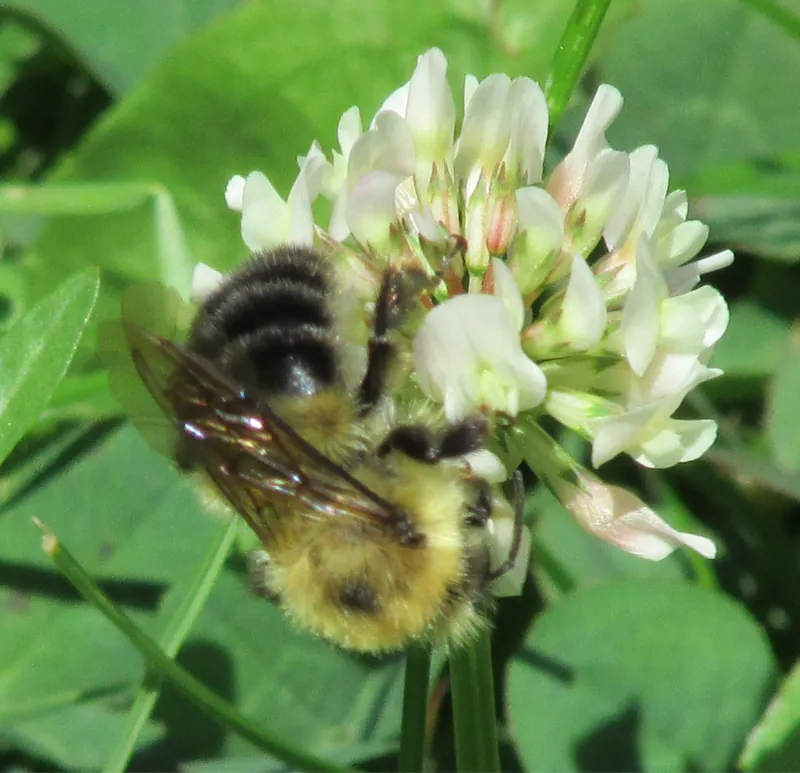
Clover honey comes from several Trifolium species, chiefly white, red, alsike and crimson clover, forage legumes traditionally grown in high-rainfall regions of Europe and North America; white clover is also an important nectar source in south-east Australia, and Egyptian clover gives one of Egypt's main honeys. White, red, crimson and Egyptian clover are listed among plants giving unifloral honey in Europe. Egyptian clover honey has the low electrical conductivity of a blossom honey.
What we know
Origin and plant
Clover honey is produced from various species of the genus Trifolium.
Confirmed fact[1]The most important clovers for honey production are red clover, white or Dutch clover, alsike clover and crimson clover.
Confirmed fact[1]Many Trifolium species are grown extensively as fodder plants for pasture animals, and these crops also attract bees.
Confirmed fact[1]Red, white and alsike clovers are traditionally grown in the high-rainfall regions of Europe and North America.
Confirmed fact[1]White clover, red clover, crimson clover and Egyptian clover are all listed by the International Honey Commission among botanical species giving unifloral honey in Europe.
Confirmed fact[2]White clover is predominantly self-incompatible, and in Australia the honey bee is its most important pollinator.
Confirmed fact[3]In Egypt, clover honey from Trifolium alexandrinum is one of the main honey types; in one study of 15 samples the predominant clover pollen averaged about 69 percent.
Confirmed fact[4]
How to recognise it
In the same study citrus honeys were the brightest, with higher mean lightness (CIELAB L*) than the clover honeys, which averaged L* 75.55 ± 1.15.
Confirmed fact[4]
Composition
Electrical conductivity of Egyptian clover honeys, 0.270 ± 0.029 mS/cm on average, marks them as typical blossom honey.
Confirmed fact[4]
Production
An Australian government review, citing Howes (2007), repeats the claim that a greater quantity of honey is obtained from white clover than from any other individual plant.
Reported by the farm[3]In south-east Australia white clover flowers attract honey bees and are an important source of nectar and pollen for commercial honey production.
Confirmed fact[3]Temperatures below 18 degrees Celsius reduce the nectar flow of white clover flowers.
Confirmed fact[3]
Honey Odyssey describes composition, origin and tradition. It does not give medical advice or health claims.
Continue
Sources
- Sultana S., Foster K., Lim L.Y., Hammer K., Locher C. (2022) A Review of the Phytochemistry and Bioactivity of Clover Honeys (Trifolium spp.). Foods 11(13): 1901. doi:10.3390/foods11131901 Link
- Persano Oddo L., Piana L., Bogdanov S., Bentabol A., Gotsiou P., Kerkvliet J., Martin P., Morlot M., Ortiz Valbuena A., Ruoff K., von der Ohe K. (2004) Botanical species giving unifloral honey in Europe. Apidologie 35 (Suppl. 1): S82-S93 Link
- Office of the Gene Technology Regulator, Australian Government (2021) The Biology of Trifolium repens L. (White Clover), Version 3.1, March 2021, sections 2.2 and 4.2 Link
- Karabagias I.K., Karabournioti S. (2018) Discrimination of Clover and Citrus Honeys from Egypt According to Floral Type Using Easily Assessable Physicochemical Parameters and Discriminant Analysis: An External Validation of the Chemometric Approach. Foods 7(5): 70. doi:10.3390/foods7050070 Link
Last checked: 30 October 2026. Every statement on this page was compared with the source it cites.