Apidae
Apis laboriosa
Himalayan giant honey bee, Cliff bee, Rock bee
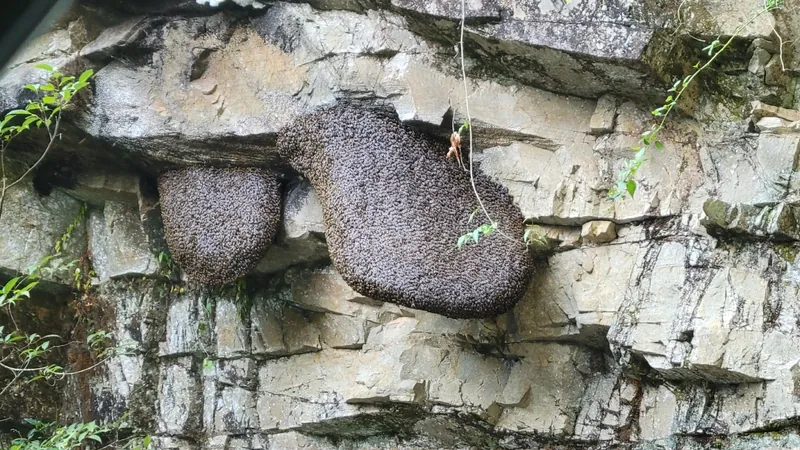
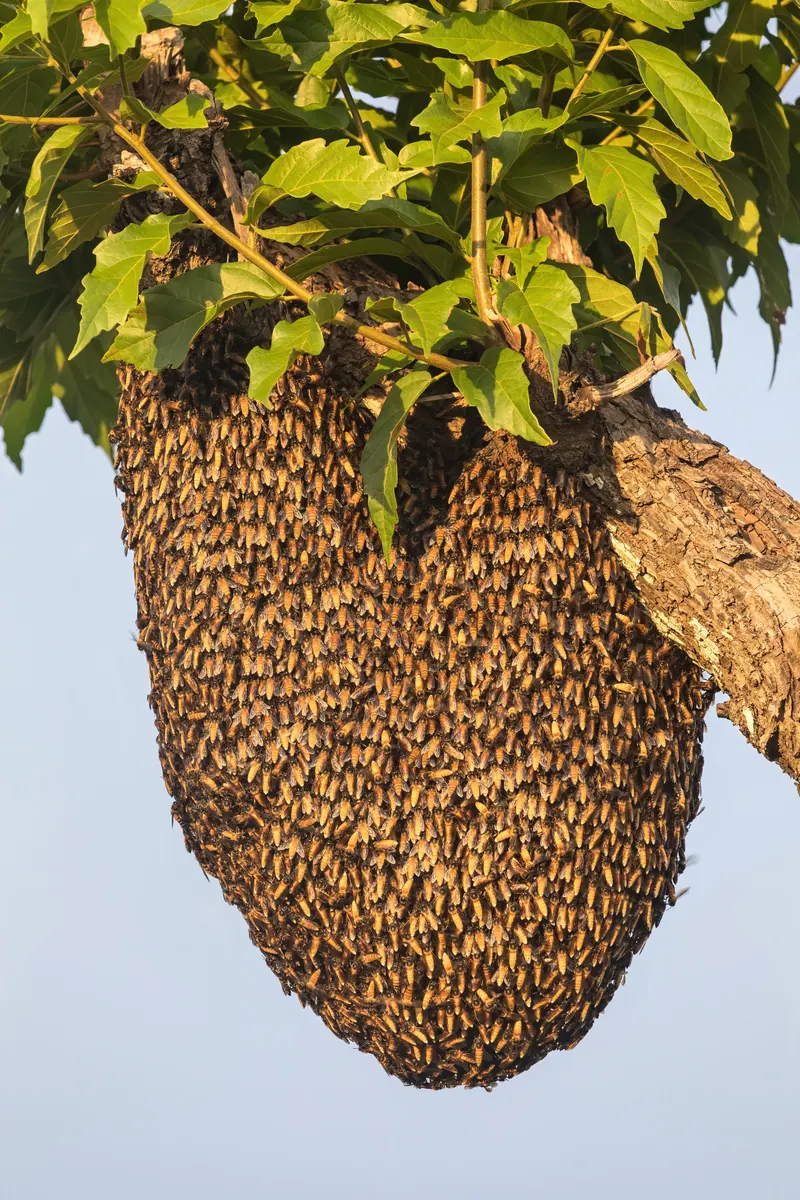
Apis laboriosa is the Himalayan giant honey bee, described from Yunnan in 1871 and considered the largest honey bee in the world. It builds a single exposed comb under cliff overhangs in the mountains of Nepal, India, Bhutan, China, Myanmar, Laos and Vietnam, mostly between 1000 and 3000 m, and local honey-hunters harvest its nests.
What we know
How to recognise it
In a 1980 morphological study, Apis laboriosa was judged a distinct species and considered the largest honey bee in the world.
Confirmed fact[2]Workers measured in that study averaged about 17.50 mm in body length, compared with 16.47 mm for workers of Apis dorsata.
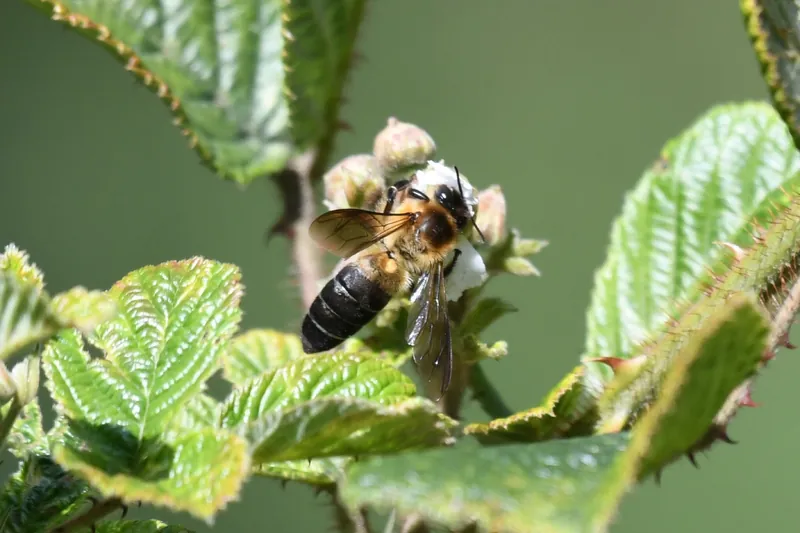
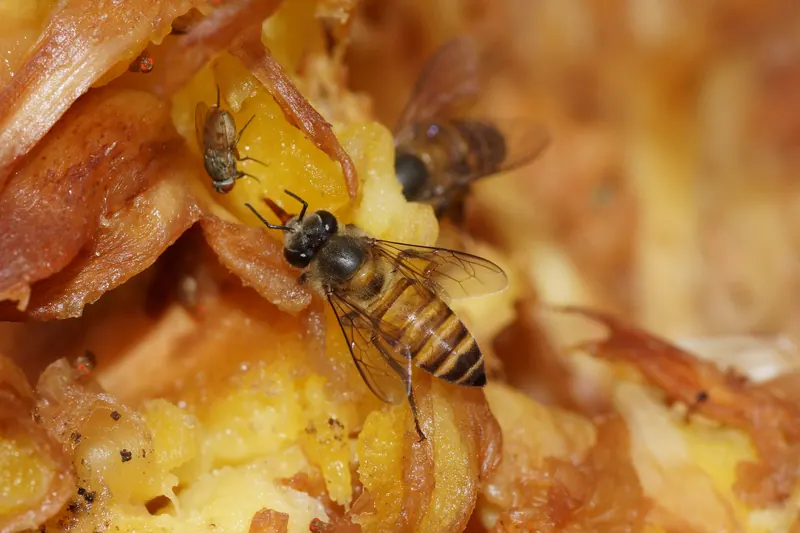
Confirmed fact[2]The top of its abdomen is uniformly blackish, whereas the lowland giant honey bee Apis dorsata has pale orange-brown basal segments.
Confirmed fact[2]
Where it lives
Mapped records come from seven countries: Bhutan, China, India, Laos, Myanmar, Nepal and Vietnam, with Nepal and India holding the most localities.
Confirmed fact[1]Known localities range from about 230 m to 4270 m above sea level, and 77.2 percent of records lie between 1000 and 3000 m.
Confirmed fact[1]
Life cycle and colony
Nest
It is a spectacular but poorly understood species, largely because it usually nests on inaccessible cliff faces in the Himalaya.
Confirmed fact[1]Nests are single combs built in the open: two nests recorded in Nepal were each about 1 m long and built side by side under a cliff about 10 m high.
Observation[2]
Behaviour
Bees and people
Honey-hunters tell the two giant honey bees apart from experience: the cliff bee with a black abdomen and the tree bee with an orange abdomen.
Confirmed fact[1]The first specimen was collected in the mountains of western Yunnan and named by Frederick Smith in 1871, but the species was long ignored; some later authors treated it as a subspecies of Apis dorsata.
Confirmed fact[2]
Conservation
Asian honey bees, and especially species like this one with a restricted range in hard-to-reach areas, remain dramatically understudied; no formal conservation assessment was found.
Confirmed fact[1]
Where it has been recorded
Each hexagon contains at least one record of Apis laboriosa shared with GBIF: museum specimens, surveys and photographs.
416 records
- India144
- Bhutan114
- Nepal104
- People's Republic of China43
- Thailand6
- Vietnam3
GBIF.org occurrence data for taxon key 10337043, retrieved 2026-10-19. Observation[4]
Records show where the bee has been found and reported, not its full range or its abundance. Isolated points far from the main cluster can be misidentifications, captive or imported bees, or genuine rare finds.
More from this part of the bee family tree
Sources
- Kitnya, N., Prabhudev, M.V., Bhatta, C.P., Pham, T.H., Nidup, T., Megu, K., Chakravorty, J., Brockmann, A. & Otis, G.W. (2020). Geographical distribution of the giant honey bee Apis laboriosa Smith, 1871 (Hymenoptera, Apidae). ZooKeys 951: 67-81. https://doi.org/10.3897/zookeys.951.49855 Link
- Sakagami, S.F., Matsumura, T. & Ito, K. (1980). Apis laboriosa in Himalaya, the little known world largest honeybee (Hymenoptera, Apidae). Insecta Matsumurana, New Series 19: 47-77. Link
- Underwood, B.A. (1990). Time of drone flight of Apis laboriosa Smith in Nepal. Apidologie 21(6): 501-504. https://doi.org/10.1051/apido:19900602 Link
- GBIF.org (2026). Occurrence search and density maps for Apis laboriosa, taxon key 10337043. Link
Last checked: 30 October 2026. Every statement on this page was compared with the source it cites. Spotted an error? Report it.