Apidae
Apis cerana
Asian honey bee, Eastern honey bee, Oriental honey bee
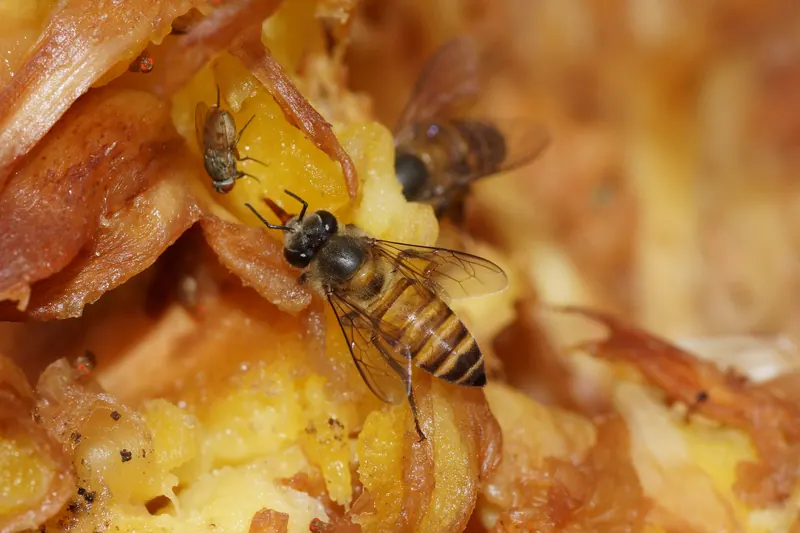
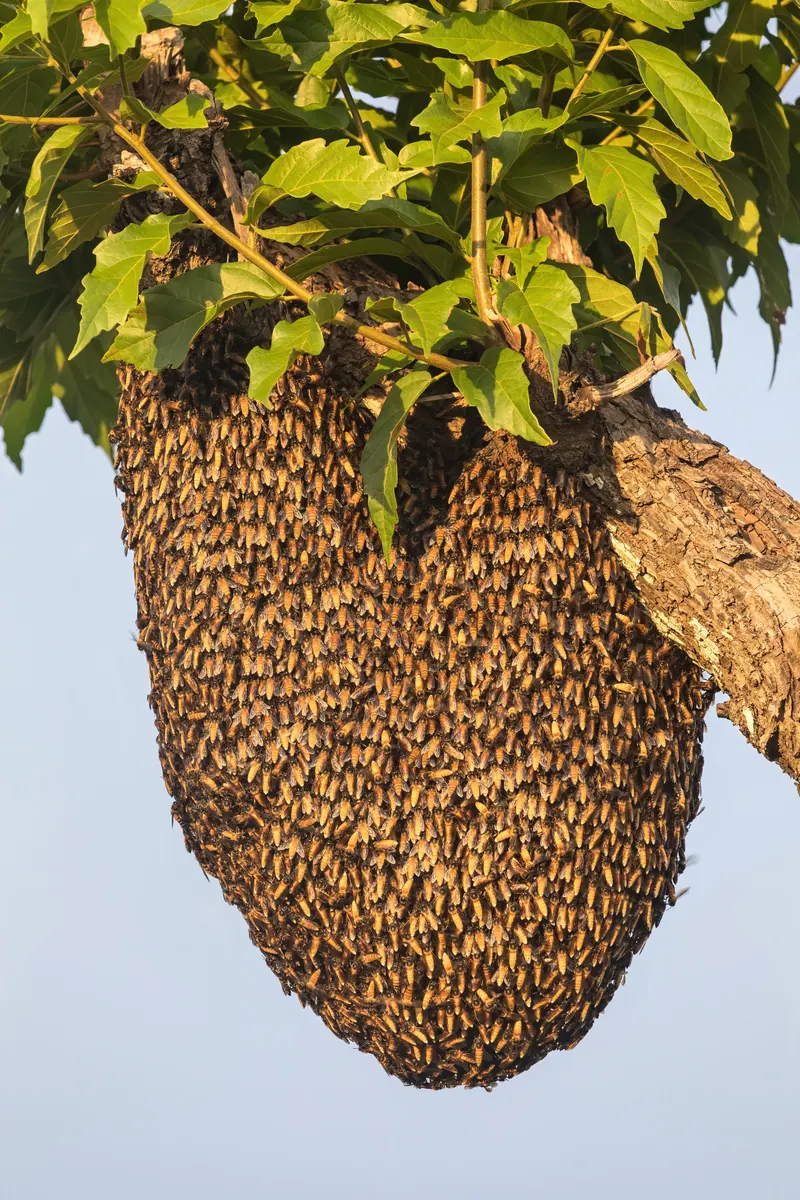
The Asian honey bee lives across tropical and temperate Asia, from Afghanistan to Japan. Smaller than the western honey bee, it builds several combs inside dark cavities such as tree hollows and caves. It has been kept in hives in Asia for thousands of years and has spread to New Guinea, the Solomon Islands and Australia.
What we know
How to recognise it
Where it lives
The Asian honey bee's natural range stretches across temperate and tropical Asia, from Afghanistan in the west to Japan in the east.
Confirmed fact[1]It has been introduced outside its natural range, to New Guinea, the Solomon Islands and Australia.
Confirmed fact[1]In 2007, a nest of Asian honey bees was found in Cairns, Australia.
Observation[1]
Life cycle and colony
Nest
Flowers and food
On a single foraging trip, a forager tends to collect either pollen or nectar, not both, from a single plant species.
Confirmed fact[1]
Behaviour
Bees and people
People in Asia have kept this bee in many kinds of hives for thousands of years.
Confirmed fact[3]
Conservation
The Asian honey bee is a host of several Varroa mites, including Varroa destructor.
Confirmed fact[1]
Where it has been recorded
Each hexagon contains at least one record of Apis cerana shared with GBIF: museum specimens, surveys and photographs.
30,371 records
- People's Republic of China5,723
- India4,658
- Taiwan2,967
- Hong Kong2,447
- Japan2,227
- Singapore2,012
GBIF.org occurrence data for taxon key 1341979, retrieved 2026-10-19. Observation[4]
Records show where the bee has been found and reported, not its full range or its abundance. Isolated points far from the main cluster can be misidentifications, captive or imported bees, or genuine rare finds.
More from this part of the bee family tree
Sources
- Koetz, A. H. (2013). Ecology, Behaviour and Control of Apis cerana with a Focus on Relevance to the Australian Incursion. Insects 4(4): 558-592. https://doi.org/10.3390/insects4040558 Link
- Koetz, A. (2013). The Asian honey bee (Apis cerana) and its strains, with special focus on Apis cerana Java genotype: Literature review. Asian honey bee Transition to Management Program. State of Queensland, Department of Agriculture, Fisheries and Forestry. Link
- Akratanakul, P. (1990). Beekeeping in Asia, Chapter 1: Honeybees of the genus Apis. FAO Agricultural Services Bulletin 68/4. Rome: FAO. Link
- GBIF.org (2026). Occurrence search and density maps for Apis cerana, taxon key 1341979. Link
Last checked: 20 October 2026. Every statement on this page was compared with the source it cites. Spotted an error? Report it.