Apidae
Apis mellifera
Western honey bee, European honey bee
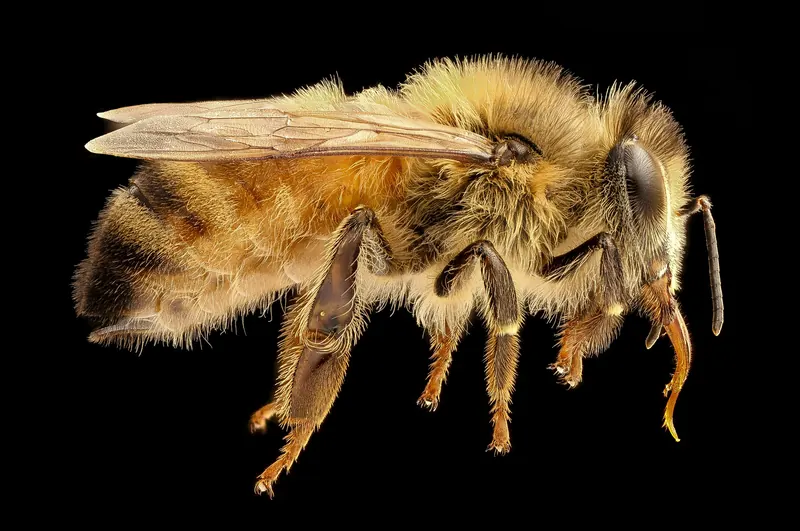
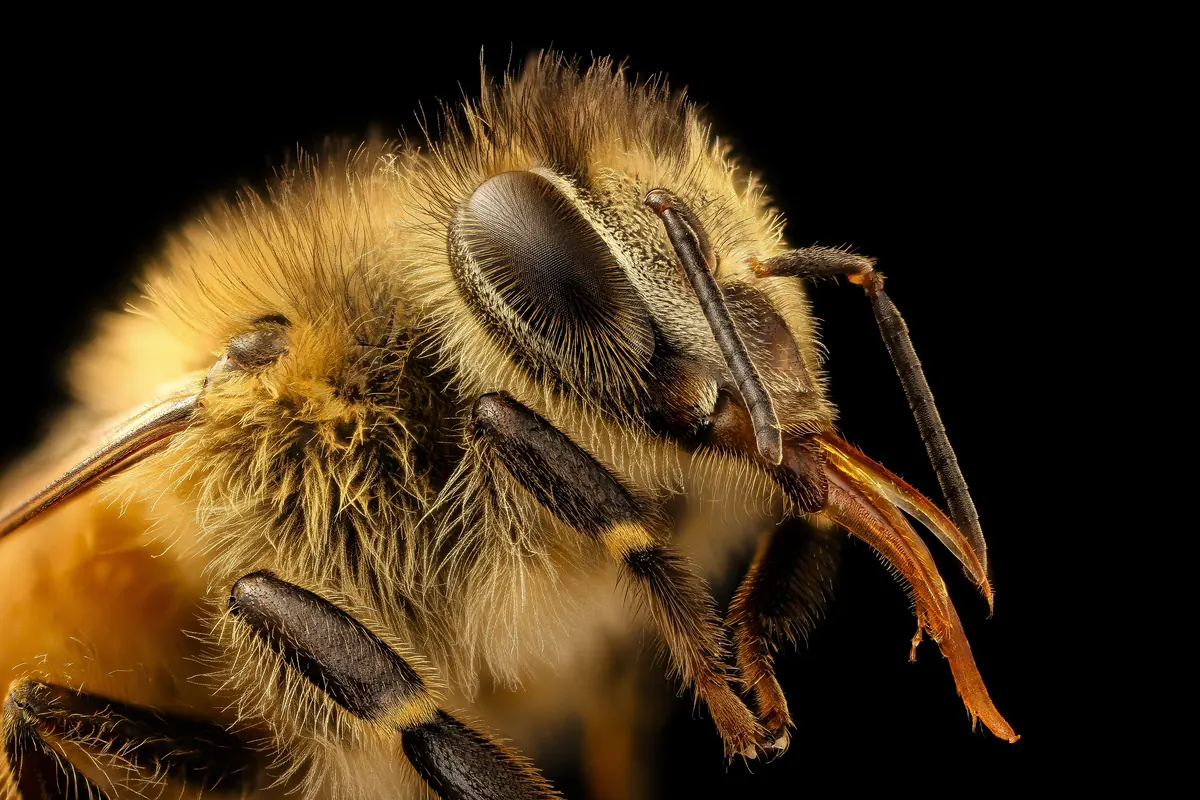
The western honey bee is native to Europe, the Middle East and Africa and now lives on every continent except Antarctica. Colonies nest in enclosed cavities on several parallel wax combs. A single queen lays all the eggs, and people keep the bee for honey, wax and crop pollination.
What we know
How to recognise it
The species is divided into at least 20 recognized subspecies.
Confirmed fact[1]
Where it lives
Life cycle and colony
The queen produces all of the colony's offspring and can lay up to 1,500 eggs a day.
Confirmed fact[1]From egg to adult, a queen takes 15 to 16 days, a worker 21 days and a drone 24 days.
Confirmed fact[1]A young queen leaves the colony to mate with about 15 drones.
Confirmed fact[1]Workers are non-reproductive females that take on different jobs in a predictable order as they age.
Confirmed fact[1]European honey bees usually swarm in spring and early summer, when flowers offer plenty of pollen and nectar.
Confirmed fact[1]
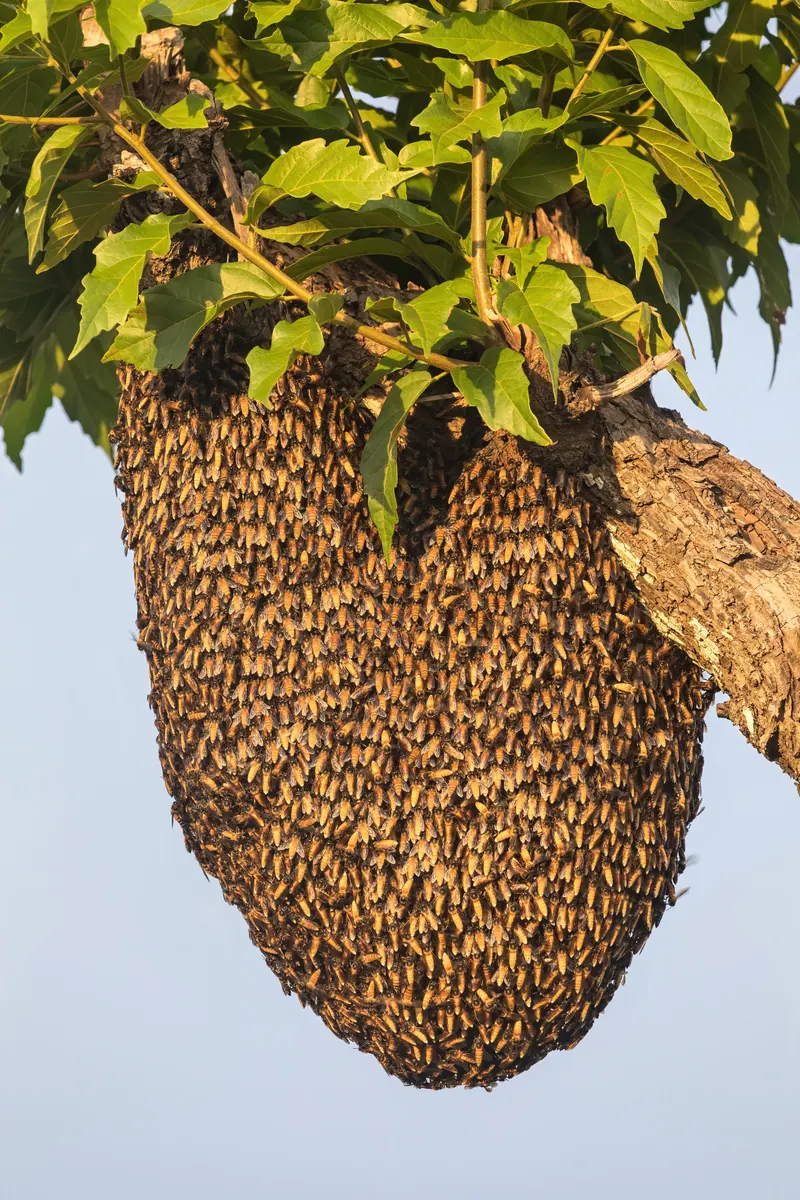
Nest
Behaviour
A colony reproduces by swarming: the old queen and about two thirds of the adult workers leave the colony.
Confirmed fact[1]
Bees and people
Where it has been recorded
Each hexagon contains at least one record of Apis mellifera shared with GBIF: museum specimens, surveys and photographs.
1,313,239 records
- United States354,070
- Netherlands177,551
- Poland140,460
- Germany137,839
- United Kingdom79,121
- France60,237
GBIF.org occurrence data for taxon key 1341976, retrieved 2026-10-19. Observation[3]
Records show where the bee has been found and reported, not its full range or its abundance. Isolated points far from the main cluster can be misidentifications, captive or imported bees, or genuine rare finds.
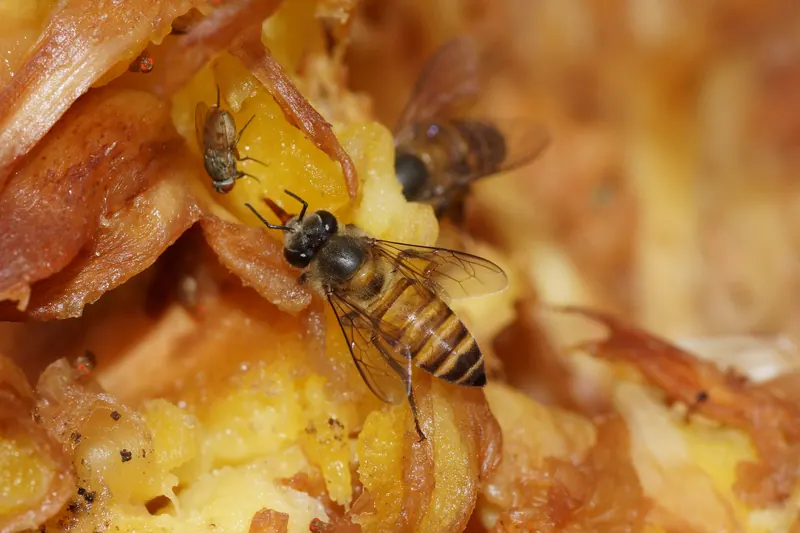
More from this part of the bee family tree
Sources
- Mortensen, A. N., Schmehl, D. R., & Ellis, J. D. (revised 2025). European Honey Bee Apis mellifera Linnaeus and subspecies (Insecta: Hymenoptera: Apidae). University of Florida IFAS Extension, Featured Creatures EENY568/IN1005. Link
- Akratanakul, P. (1990). Beekeeping in Asia, Chapter 1: Honeybees of the genus Apis. FAO Agricultural Services Bulletin 68/4. Rome: FAO. Link
- GBIF.org (2026). Occurrence search and density maps for Apis mellifera, taxon key 1341976. Link
Last checked: 20 October 2026. Every statement on this page was compared with the source it cites. Spotted an error? Report it.