Apidae
Apis florea
Dwarf honey bee
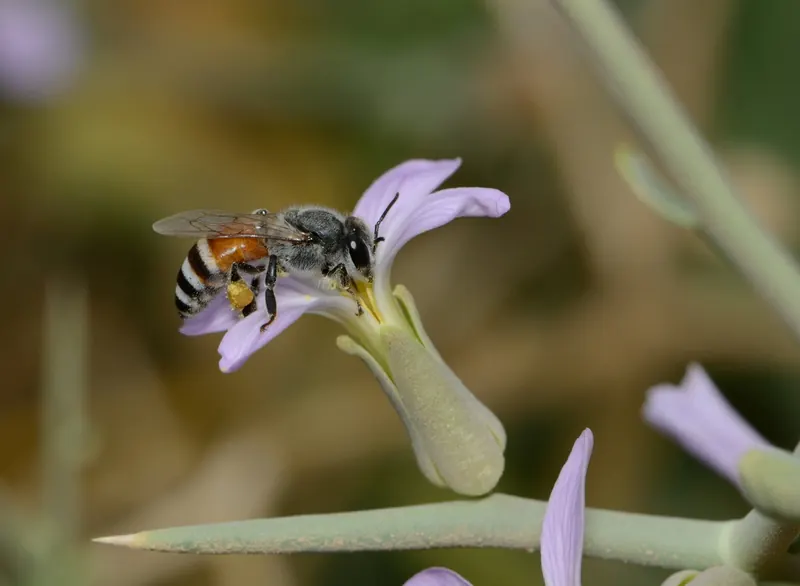
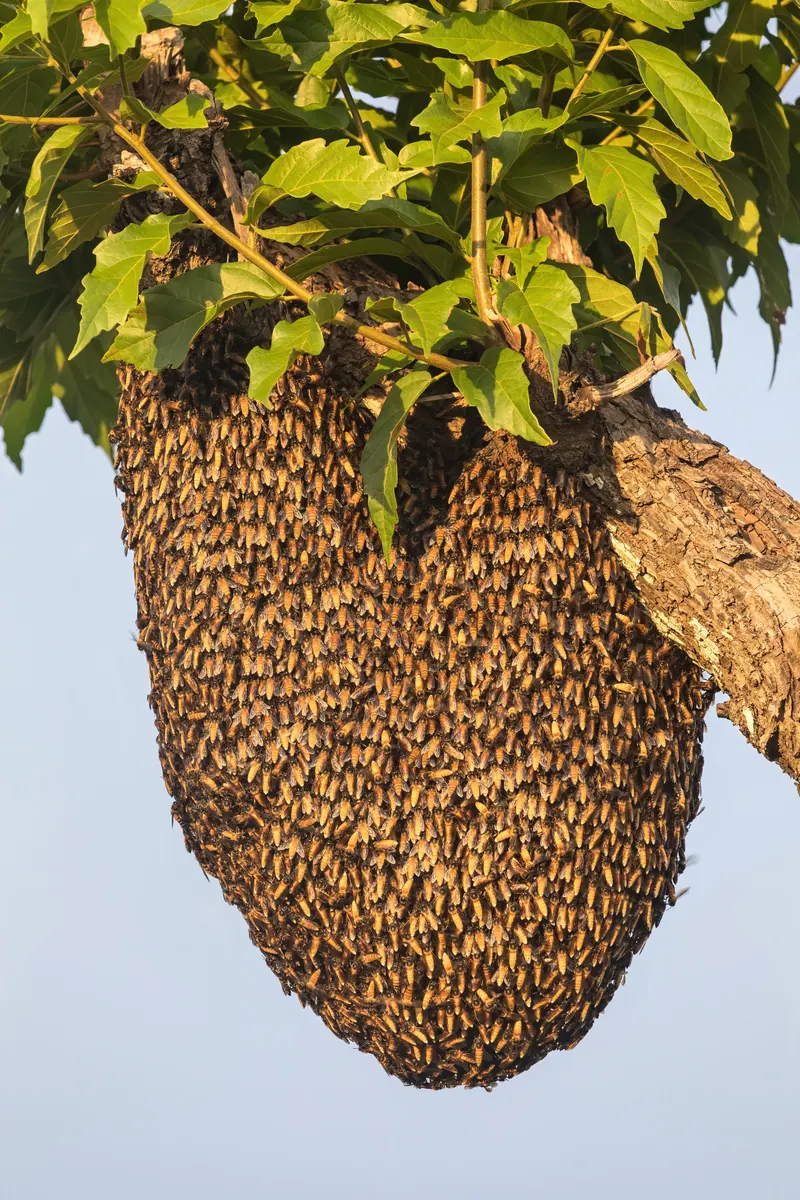
The dwarf honey bee is a small honey bee, about 9 mm long, found from Oman and Iran to Vietnam and southeastern China. Each colony builds one small comb wrapped around a twig, hidden in bushes. It was first found in Sudan in 1985 and has since spread to Egypt, and it has also been introduced to parts of the Middle East.
What we know
How to recognise it
The dwarf honey bee is about 9 mm long.
Confirmed fact[2]
Where it lives
The dwarf honey bee's range spans about 7,000 km, from Vietnam and southeastern China west to Iran and Oman.
Confirmed fact[1]It lives in a wide variety of habitats, including rainforests, savannas, subtropical steppes and semideserts.
Confirmed fact[1]Outside Asia, it was first detected in Khartoum, Sudan, in 1985.
Observation[2]It has recently spread to Egypt, its second entry into Africa.
Confirmed fact[2]
Life cycle and colony
When food is plentiful, a colony can send out several reproductive swarms.
Confirmed fact[2]
Nest
Flowers and food
It is an efficient pollinator, especially of cotton.
Confirmed fact[2]
Behaviour
Bees and people
Conservation
Whether the invading dwarf honey bee harms local bees is still open: it competes well with western honey bees, but a Sudan study found no sign it was displacing them.
Open question[2]
Where it has been recorded
Each hexagon contains at least one record of Apis florea shared with GBIF: museum specimens, surveys and photographs.
9,927 records
- India4,348
- Thailand1,949
- Sri Lanka697
- Singapore604
- United Arab Emirates381
- Kuwait175
GBIF.org occurrence data for taxon key 1341974, retrieved 2026-10-19. Observation[4]
Records show where the bee has been found and reported, not its full range or its abundance. Isolated points far from the main cluster can be misidentifications, captive or imported bees, or genuine rare finds.
More from this part of the bee family tree
Sources
- Hepburn, H. R., Radloff, S. E., Otis, G. W., Fuchs, S., Verma, L. R., Tan, K., Chaiyawong, T., Tahmasebi, G., Ebadi, R., & Wongsiri, S. (2005). Apis florea: morphometrics, classification and biogeography. Apidologie 36(3): 359-376. https://doi.org/10.1051/apido:2005023 Link
- El-Niweiri, M. A. A., Moritz, R. F. A., & Lattorff, H. M. G. (2019). The Invasion of the Dwarf Honeybee, Apis florea, along the River Nile in Sudan. Insects 10(11): 405. https://doi.org/10.3390/insects10110405 Link
- Akratanakul, P. (1990). Beekeeping in Asia, Chapter 1: Honeybees of the genus Apis. FAO Agricultural Services Bulletin 68/4. Rome: FAO. Link
- GBIF.org (2026). Occurrence search and density maps for Apis florea, taxon key 1341974. Link
Last checked: 20 October 2026. Every statement on this page was compared with the source it cites. Spotted an error? Report it.