Unifloral honey
Rapeseed honey
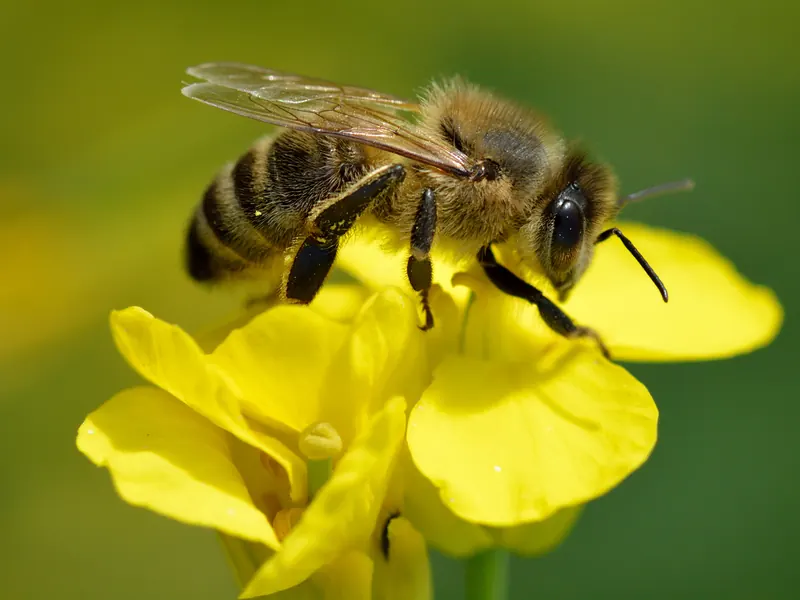
Rapeseed honey comes from oilseed rape, a crop grown for oil that is a key spring nectar source in Central and Eastern Europe. It is light in colour and crystallises quickly into very fine crystals because of its high glucose content.
What we know
Origin and plant
How to recognise it
Rapeseed pollen is normally represented in its honey.
Confirmed fact[1]Its colour is light, averaging 26.2 ± 4.1 mm Pfund.
Confirmed fact[1]In sensory analysis the odour is of medium intensity, described as spoiled and vegetal.
Observation[1]Sensory panels rate sweetness medium, acidity weak and bitterness absent.
Observation[1]The aftertaste is short, sometimes with a note of blackcurrant.
Observation[1]
Composition
It has low electrical conductivity, low proline and a low fructose to glucose ratio.
Confirmed fact[1]
Crystallisation and storage
Honey Odyssey describes composition, origin and tradition. It does not give medical advice or health claims.
Continue
Sources
- Persano Oddo L., Piro R. (2004) Main European unifloral honeys: descriptive sheets. Apidologie 35 (Suppl. 1): S38-S81. doi:10.1051/apido:2004049 Link
Last checked: 20 October 2026. Every statement on this page was compared with the source it cites.