Hive product
Propolis
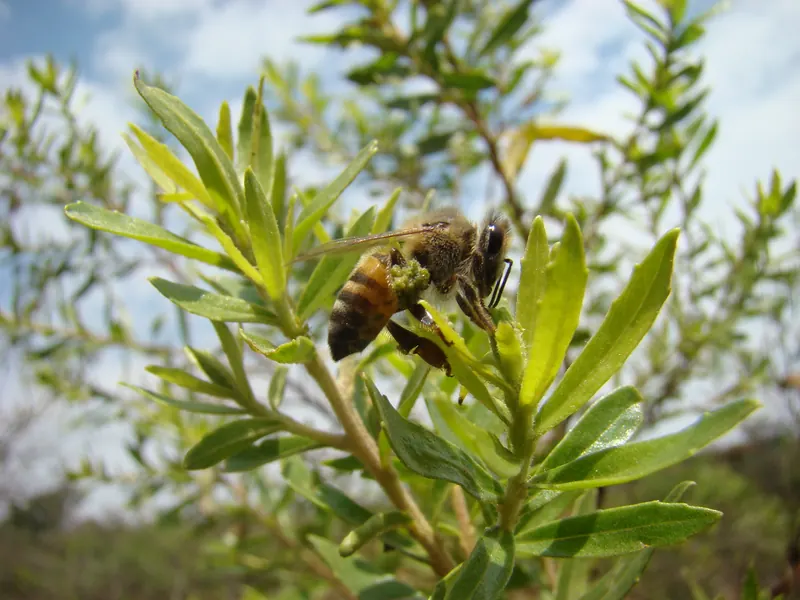
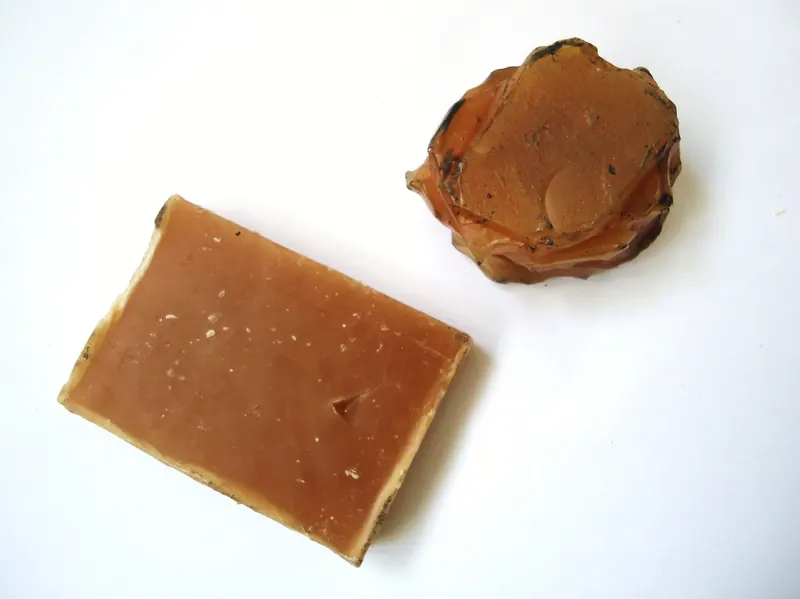
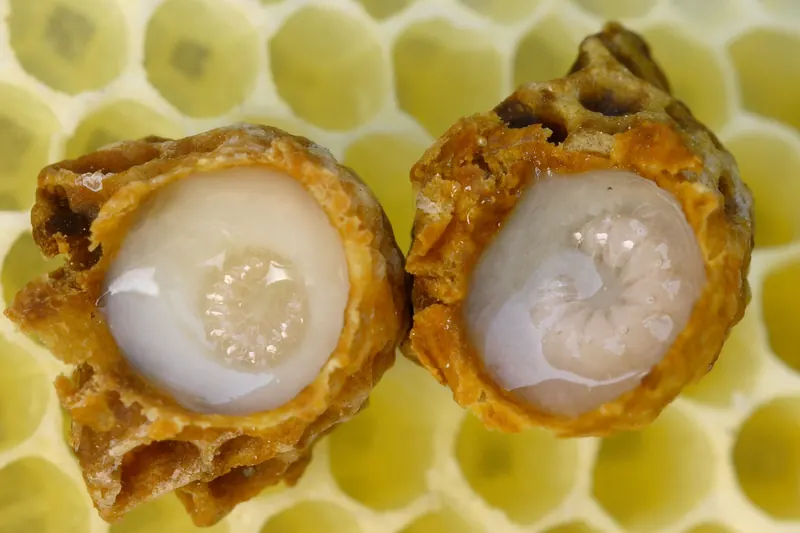
Propolis, or bee glue, is a mixture of beeswax and plant resins that honey bees collect, particularly from flowers and leaf buds. Its chemistry depends on the local flora: poplar bud exudates are the main source in temperate zones, while Brazilian green propolis comes mainly from Baccharis dracunculifolia. Bees use it to coat the nest walls and seal holes and crevices.
What we know
Origin and plant
Propolis is a mixture of beeswax and resins that honey bees collect from plants, particularly from flowers and leaf buds.
Confirmed fact[1]In temperate zones, bud exudates of poplar species (Populus) and their hybrids are the main source of propolis.
Confirmed fact[2]Brazilian green propolis derives mainly from the vegetative tips of Baccharis dracunculifolia, a shrub known locally as alecrim.
Confirmed fact[3]
How to recognise it
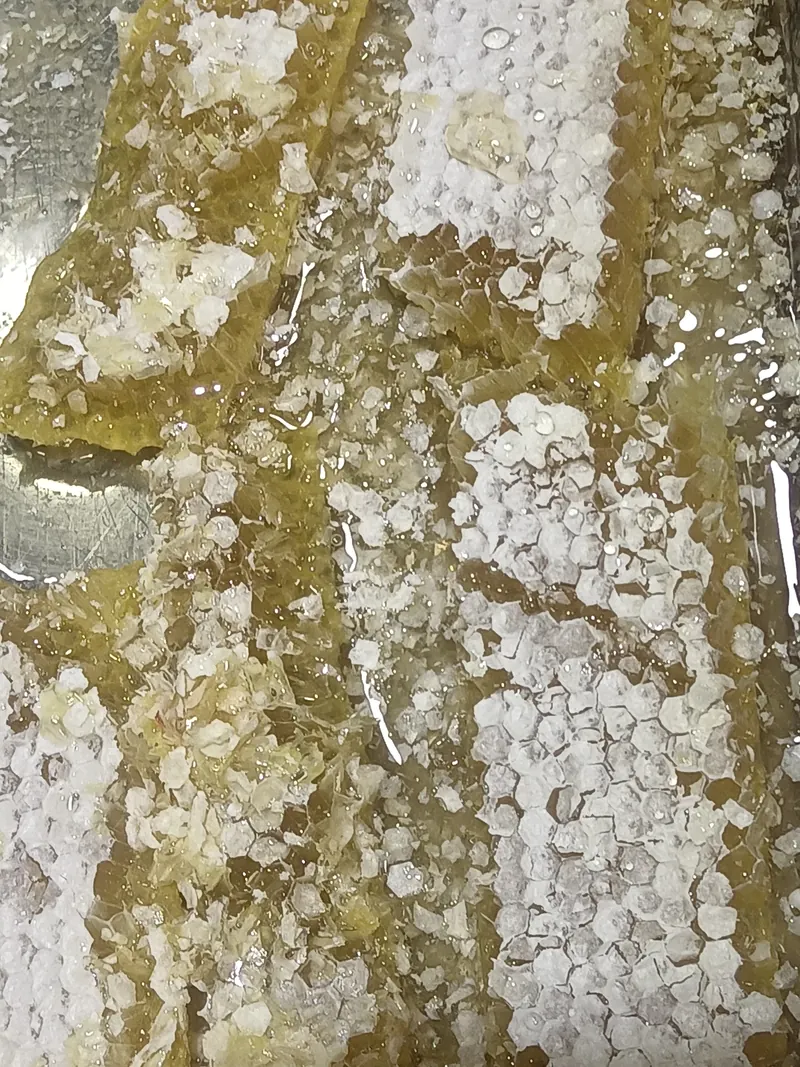
Propolis becomes hard and brittle when cold, especially near freezing, and increasingly sticky and gummy above 45 °C.
Confirmed fact[1]
Composition
The chemical composition of propolis is very complex and depends on the flora in the area where it is collected.
Confirmed fact[2]Poplar-type propolis is a mixture of phenolic compounds: flavonoid aglycones, hydroxycinnamic acids and their esters.
Confirmed fact[2]Prenylated cinnamic acids are a key chemical feature of green propolis, and identical prenylated cinnamic acids have been found in the leaves of Baccharis dracunculifolia.
Confirmed fact[3]Brazil has a wide diversity of propolis types, and in general propolis samples can differ notably even when collected at nearby locations.
Observation[3]
Production
Resin foragers carry resin home packed in the pollen baskets (corbiculae) on their hind legs, and cannot unload it by themselves.
Confirmed fact[4]In wild colonies, bees coat the entire inner walls of the cavity with a thin layer of propolis, 0.3 to 0.5 mm thick, called a propolis envelope.
Observation[4]Bees use propolis to cover holes and crevices in the nest, and keep adding it to the nest walls as the colony develops.
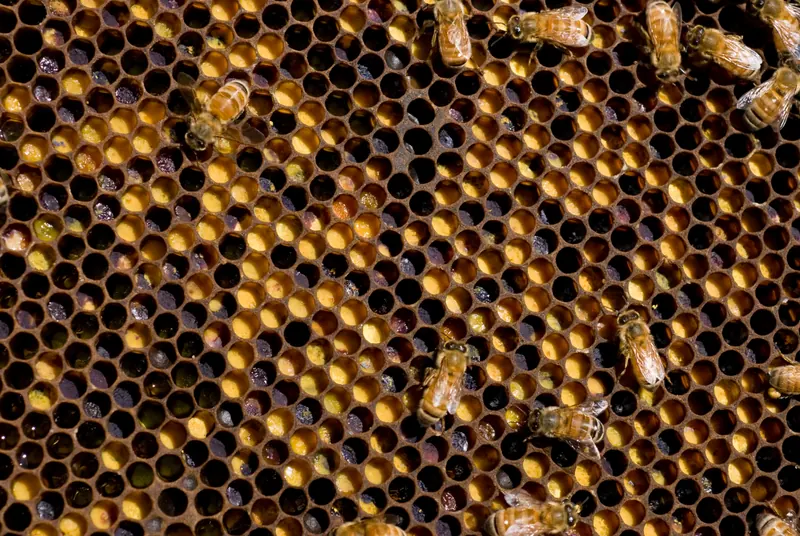
Observation[4]Bees also seal off dead animals or insects inside the hive that are too large to carry out, and mix a little propolis with wax to seal brood cells.
Observation[1]
Honey Odyssey describes composition, origin and tradition. It does not give medical advice or health claims.
Continue
Sources
- Krell, R. (1996). Value-added products from beekeeping. FAO Agricultural Services Bulletin 124. Rome: Food and Agriculture Organization of the United Nations. Chapter 5: Propolis. Link
- Bankova, V. S., de Castro, S. L., & Marcucci, M. C. (2000). Propolis: recent advances in chemistry and plant origin. Apidologie, 31(1), 3 to 15. https://doi.org/10.1051/apido:2000102 Link
- Salatino, A., Teixeira, E. W., Negri, G., & Message, D. (2005). Origin and chemical variation of Brazilian propolis. Evidence-Based Complementary and Alternative Medicine, 2(1), 33 to 38. https://doi.org/10.1093/ecam/neh060 (PMC1062153) Link
- Simone-Finstrom, M., & Spivak, M. (2010). Propolis and bee health: the natural history and significance of resin use by honey bees. Apidologie, 41(3), 295 to 311. https://doi.org/10.1051/apido/2010016 Link
Last checked: 20 October 2026. Every statement on this page was compared with the source it cites.