Apidae
Melipona scutellaris
Urucu do Nordeste, Urucu verdadeira, Urucu
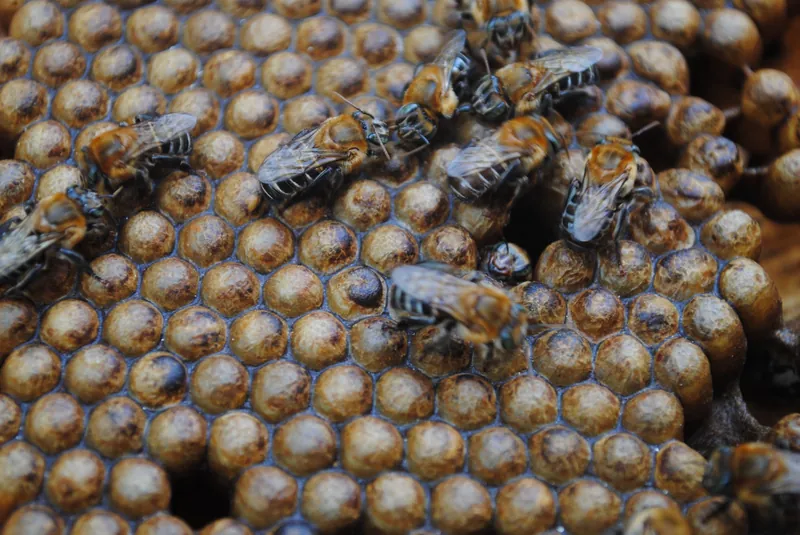
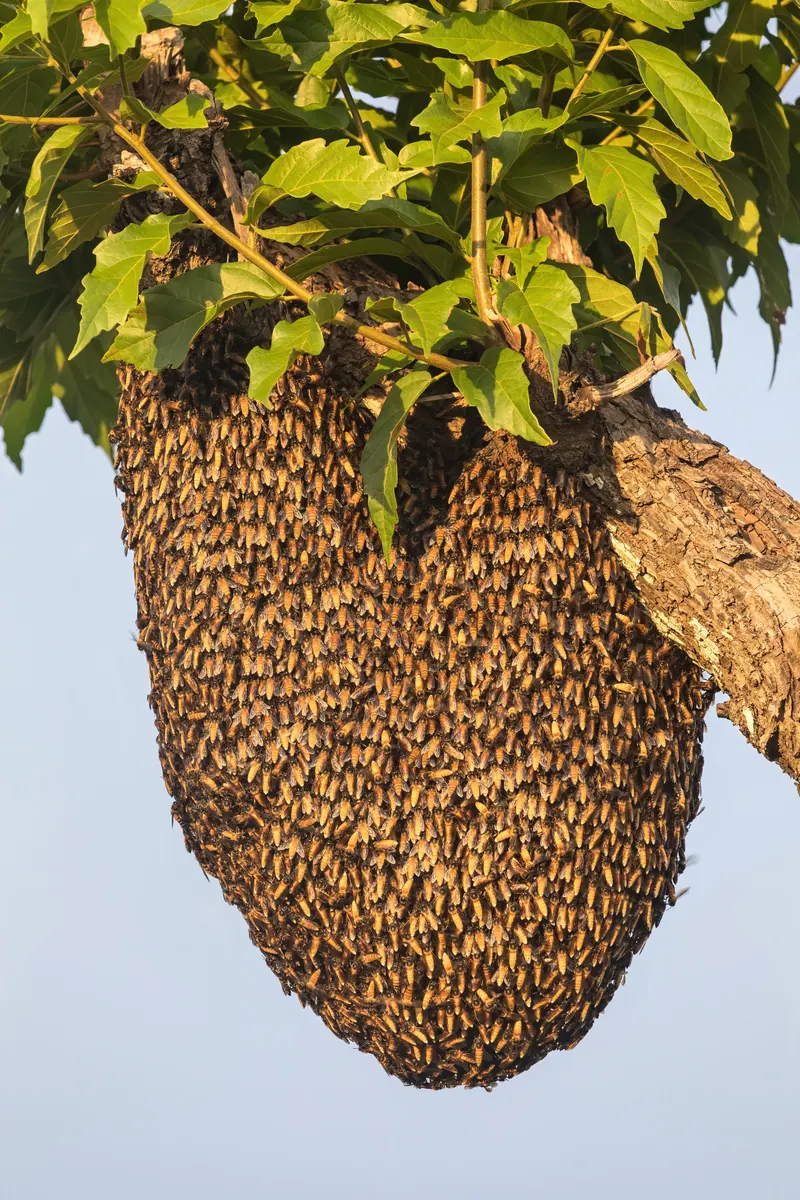
Melipona scutellaris, the urucu of northeastern Brazil, is a stingless bee of the Atlantic rainforest coast from Rio Grande do Norte to Bahia. It nests in cavities of usually large trees and was one of the first bees domesticated by Indigenous peoples there. Today it is widely kept in meliponaries for honey and pollen.
What we know
Where it lives
It is considered the kept stingless bee with the largest distribution in the North and Northeast of Brazil, with records from Rio Grande do Norte south to Bahia.
Confirmed fact[1]A 1962 study found it lives in the humid Northeast along the whole coast, mainly in the Atlantic rainforest, though it may also occur in some inland areas of Pernambuco, Alagoas and Bahia.
Confirmed fact[1]In the state of Bahia it was recorded in 102 of 417 municipalities, at elevations from sea level up to 1,200 m.
Confirmed fact[1]
Life cycle and colony
Colonies at lower, warmer elevations had more individuals, while colonies at higher elevations were smaller and frequently built an involucrum around the brood.
Confirmed fact[1]
Nest
Flowers and food
In honey from six meliponaries around Salvador, Bahia, researchers identified 111 pollen types from 28 plant families; the pea family Fabaceae was the most diverse, and Mimosa caesalpiniifolia pollen was in every sample.
Confirmed fact[2]Despite this variety, the bees concentrated their foraging on a few plant resources, including species of Eucalyptus, Mimosa, Protium, Serjania and Tapirira.
Confirmed fact[2]
Bees and people
Known locally as urucu do Nordeste or urucu verdadeira, it was one of the first bee species domesticated by Indigenous peoples including the Potiguara, Kiriri, Xucuru, Pataxo, Paiaku, Tupicuruba and Aymore.
Confirmed fact[1]It is the best known and most managed stingless bee species in Bahia.
Confirmed fact[1]It is a typical stingless bee of Atlantic rainforest sites in northeastern Brazil, a region where it is widely kept in meliponaries for honey and pollen, in both rural and urban areas.
Confirmed fact[2]FAO lists it among the stingless bee species most commonly kept in Latin America, alongside Melipona beecheii, Melipona compressipes and Tetragonisca angustula.
Confirmed fact[3]
Conservation
Fires and natural enemies, together with deforestation, planting of crops, growing human settlement and honey extractors, are reducing the number of colonies.
Confirmed fact[1]
Where it has been recorded
Each hexagon contains at least one record of Melipona scutellaris shared with GBIF: museum specimens, surveys and photographs.
538 records
- Brazil537
- French Guiana1
GBIF.org occurrence data for taxon key 1340060, retrieved 2026-10-19. Observation[4]
Records show where the bee has been found and reported, not its full range or its abundance. Isolated points far from the main cluster can be misidentifications, captive or imported bees, or genuine rare finds.
More from this part of the bee family tree
Sources
- Alves, R.M.O., Carvalho, C.A.L., Souza, B.A. & Santos, W.S. (2012). Areas of natural occurrence of Melipona scutellaris Latreille, 1811 (Hymenoptera: Apidae) in the state of Bahia, Brazil. Anais da Academia Brasileira de Ciencias 84(3): 679-688. Link
- Andrade, B.R., Nascimento, A.S., Franco, E.L., Santos, D.R., Alves, R.M.O., Costa, M.A.P.C. & Carvalho, C.A.L. (2019). Pollen spectrum and trophic niche width of Melipona scutellaris Latreille, 1811 (Hymenoptera: Apidae) in highly urbanized and industrialized sites. Sociobiology 66(2): 279-286. https://doi.org/10.13102/sociobiology.v66i2.3427 Link
- Bradbear, N. (2009). Bees and their role in forest livelihoods. Non-Wood Forest Products 19. FAO, Rome. Chapter 6, Meliponiculture of stingless bees, pp. 51-53. Link
- GBIF.org (2026). Occurrence search and density maps for Melipona scutellaris, taxon key 1340060. Link
Last checked: 30 October 2026. Every statement on this page was compared with the source it cites. Spotted an error? Report it.