Apidae
Melipona beecheii
Xunan kab, Colel kab, Royal lady bee
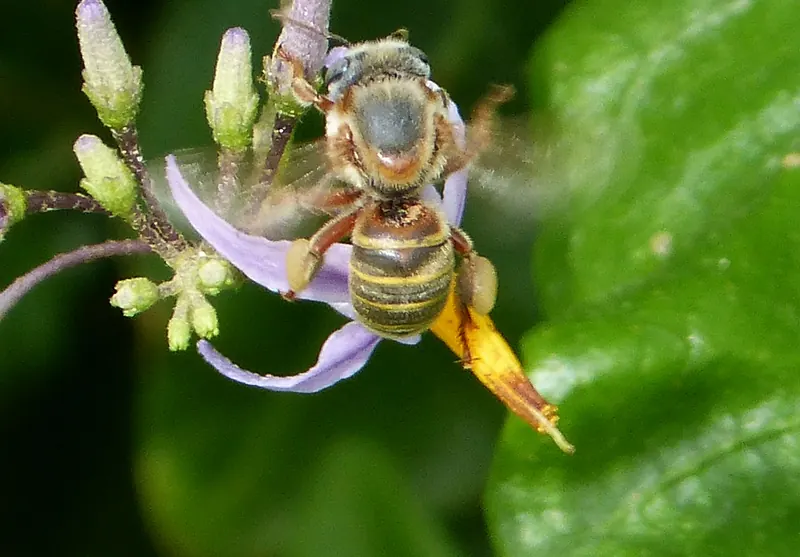
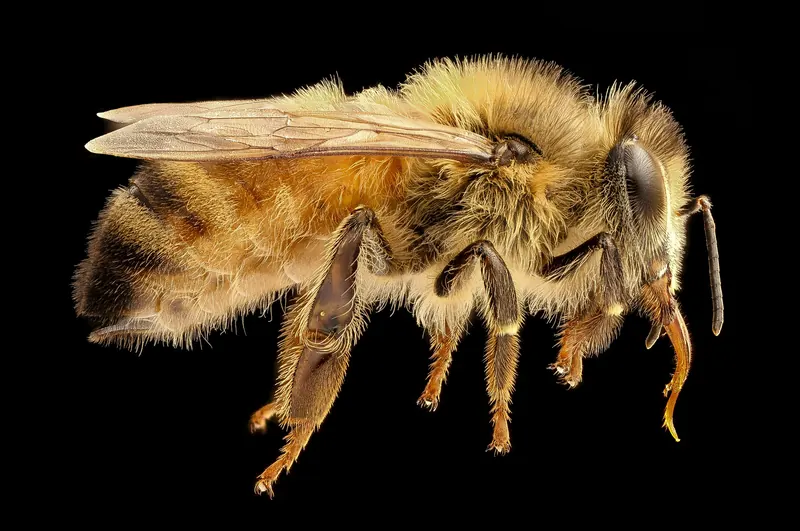
Melipona beecheii is a stingless bee of Mexico and Central America, with further populations in Cuba and Jamaica. The Maya have kept it in hollow log hives, called jobones, for thousands of years and call it xunan kab, the royal lady bee. Wild nests need large hollow trees, and beekeepers in the Maya zone of the Yucatan Peninsula report sharp losses of kept colonies.
What we know
Where it lives
Nest
In the wild, its nests are found only in hollows inside trees at least 30 cm around, trees that are now relatively rare.
Confirmed fact[1]
Flowers and food
Bees and people
Maya beekeepers call it xunan kab or colel kab; xunan kab literally means the royal lady bee.
Confirmed fact[1]Maya stingless beekeeping is thought to predate the Spanish arrival by about 3,500 years.
Confirmed fact[2]The bee is kept almost only in traditional hollow log hives, known as jobones.
Confirmed fact[1]To start a hive, Maya keepers traditionally cut a section of hardwood log, such as Manilkara, that already contains a wild colony.
Confirmed fact[2]Among the Maya, its honey was also used to pay tributes, to perform rituals and to trade for goods.
Confirmed fact[2]A colony now produces about 2 kg of honey a year, compared with 20 to 30 kg from a western honey bee colony in the same region.
Confirmed fact[1]
Conservation
Beekeepers in the Maya zone of Quintana Roo, Mexico, report a 93% fall in the number of hives over about 25 years.
Reported by the farm[1]A later survey of randomly chosen beekeepers in the same area found their colonies fell from 480 to 206 over nine years.
Observation[2]Part of the decline is that the skills needed to keep and multiply colonies are not being passed on well to new keepers.
Confirmed fact[1]
Where it has been recorded
Each hexagon contains at least one record of Melipona beecheii shared with GBIF: museum specimens, surveys and photographs.
2,518 records
- Mexico2,033
- Costa Rica176
- Cuba110
- Guatemala62
- Nicaragua49
- Belize43
GBIF.org occurrence data for taxon key 1340088, retrieved 2026-10-19. Observation[3]
Records show where the bee has been found and reported, not its full range or its abundance. Isolated points far from the main cluster can be misidentifications, captive or imported bees, or genuine rare finds.
More from this part of the bee family tree
Sources
- Villanueva-G., R., Roubik, D. W., & Colli-Ucán, W. (2005). Extinction of Melipona beecheii and traditional beekeeping in the Yucatán peninsula. Bee World 86(2): 35-41. Link
- Villanueva-Gutiérrez, R., Roubik, D. W., Colli-Ucán, W., Güemez-Ricalde, F. J., & Buchmann, S. L. (2013). A critical view of colony losses in managed Mayan honey-making bees (Apidae: Meliponini) in the heart of Zona Maya. Journal of the Kansas Entomological Society 86(4): 352-362. https://doi.org/10.2317/JKES130131.1 Link
- GBIF.org (2026). Occurrence search and density maps for Melipona beecheii, taxon key 1340088. Link
Last checked: 20 October 2026. Every statement on this page was compared with the source it cites. Spotted an error? Report it.