Halictidae
Lasioglossum albipes
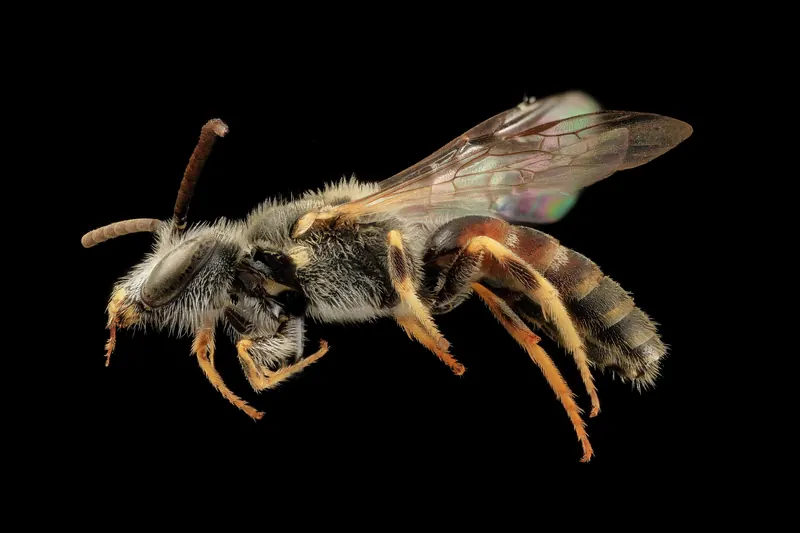
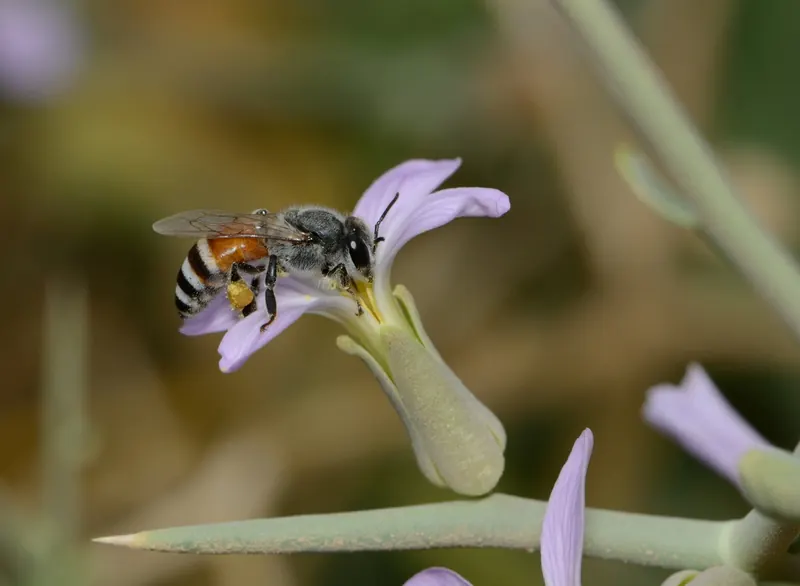
Lasioglossum albipes is a ground-nesting mining bee found from the British Isles to Japan. It is famous among biologists because some populations live in social colonies with workers while others are solitary; these differences are kept when bees are reared in the laboratory and are associated with genetic variants.
What we know
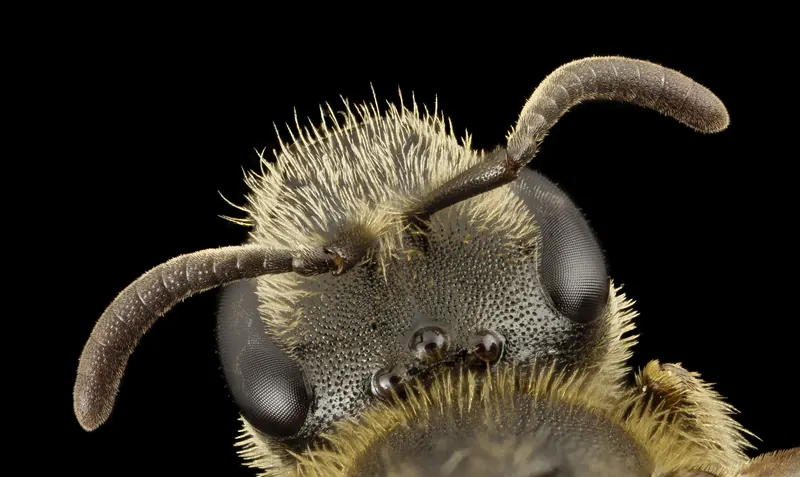
How to recognise it
Males are most easily recognised by their yellow upper lip (labrum).
Confirmed fact[1]
Where it lives
It is found right across the Palaearctic region, from the British Isles to Japan and north to Sweden.
Confirmed fact[1]In Britain it occurs from the Isles of Scilly to Kent and north into parts of Scotland, where it is less common.
Confirmed fact[1]It is a bee of woodland edges, also found in clearings, glades and scrubby areas.
Confirmed fact[1]
Life cycle and colony
Unusually, this one species produces both solitary nests and social nests with workers.
Confirmed fact[2]In France, populations in the west are social, while populations in the east are solitary.
Confirmed fact[2]Social females raise two broods, first workers and then males and future queens, while solitary females raise a single brood of offspring that reproduce.
Confirmed fact[2]When bees from social western and solitary eastern French populations were reared side by side in a laboratory, each kept its own typical behaviour.
Confirmed fact[3]Females from solitary populations are able to raise two broods, but most of them do not produce workers.
Confirmed fact[3]Females from social populations cannot produce overwintering daughters without the help of workers.
Confirmed fact[3]A 2018 genetic study linked social or solitary nesting to genetic variants, including one in a gene called syntaxin 1a that is involved in nerve signalling.
Confirmed fact[2]In Britain females fly from mid March to early October, and males from early July to mid October.
Confirmed fact[1]The researchers suggest that genes behind this variation may also help shape social behaviour in many other animals.
Open question[2]
Nest
In Britain the founding female digs a vertical main burrow about 15 cm deep.
Confirmed fact[1]
Where it has been recorded
Each hexagon contains at least one record of Lasioglossum albipes shared with GBIF: museum specimens, surveys and photographs.
28,399 records
- Switzerland8,854
- Finland3,811
- Sweden3,733
- Belgium1,881
- United Kingdom1,772
- Norway1,710
GBIF.org occurrence data for taxon key 1354990, retrieved 2026-10-19. Observation[4]
Records show where the bee has been found and reported, not its full range or its abundance. Isolated points far from the main cluster can be misidentifications, captive or imported bees, or genuine rare finds.
More from this part of the bee family tree
Sources
- Allen, G. W. (identification notes by M. Smith) (updated 2022). Lasioglossum albipes (Fabricius, 1781), species account. Bees, Wasps & Ants Recording Society (BWARS). Link
- Kocher, S. D., Mallarino, R., Rubin, B. E. R., Yu, D. W., Hoekstra, H. E. & Pierce, N. E. (2018). The genetic basis of a social polymorphism in halictid bees. Nature Communications 9: 4338. doi:10.1038/s41467-018-06824-8 Link
- Plateaux-Quénu, C., Plateaux, L. & Packer, L. (2000). Population-typical behaviours are retained when eusocial and non-eusocial forms of Evylaeus albipes (F.) (Hymenoptera, Halictidae) are reared simultaneously in the laboratory. Insectes Sociaux 47(3): 263-270. doi:10.1007/PL00001713 Link
- GBIF.org (2026). Occurrence search and density maps for Lasioglossum albipes, taxon key 1354990. Link
Last checked: 20 October 2026. Every statement on this page was compared with the source it cites. Spotted an error? Report it.