Bee plant, Central Europe
Sinapis alba
White mustard, Yellow mustard, Weisser Senf
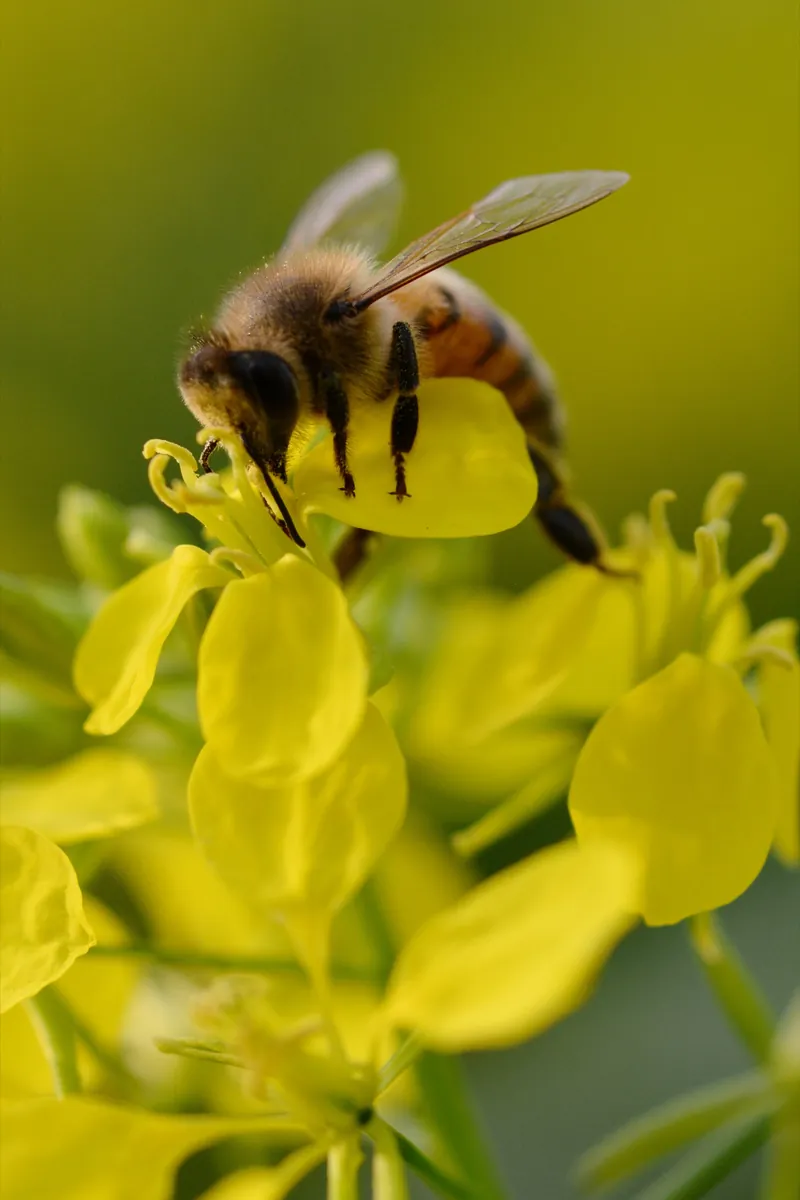
White mustard is an annual of eastern Mediterranean origin, an archaeophyte in Switzerland, grown as a catch crop and escaping on fields and roadsides. Info Flora gives June to October as its flowering period. In Polish trials honeybees made 93 percent of flower visitors, and most lines gave over 2 mg of nectar sugar per 10 flowers.
What we know
How to recognise it
When it flowers
Where it grows
In Switzerland it grows on fields, roadsides and waste ground in warmer areas, formerly cultivated as a fodder plant and escaped.
Confirmed fact[1]
What it offers bees
In Polish trials of 75 white mustard breeding lines, nectar per 10 flowers ranged from 2.3 to 24.4 mg, and most lines gave over 2 mg of sugar per 10 flowers.
Confirmed fact[3]Pollen per 10 flowers ranged from 1.2 to 12.0 mg in the same trials, with 8.5 mg for the reference cultivar Nakielska.
Confirmed fact[3]Honeybees made up 93 percent of all insects visiting white mustard flowers in the Polish trials.
Confirmed fact[3]
In the garden
The Baden-Württemberg bee forage catalogue names mustard, with phacelia, summer turnip rape and oil radish, as catch crops especially suited as food for pollinators.
Reported by the farm[4]
People
Info Flora classes white mustard as an archaeophyte of originally eastern Mediterranean origin, present in the region before 1500.
Confirmed fact[1]German direct-payment rules list Sinapis alba among the pollen- and nectar-rich species allowed on fallow land used for honey plants.
Confirmed fact[5]The Bavarian LfL includes white mustard at 5 percent in its wild seed mix for winter greening in maize rotations.
Confirmed fact[6]
Sources
- Info Flora, das nationale Daten- und Informationszentrum der Schweizer Flora. Species page: Sinapis alba L. Description text from Flora Helvetica (2018); habitat types from Delarze et al. (2015). Accessed 29 Oct 2026. Link
- Pladias, Database of the Czech Flora and Vegetation. Taxon data: Sinapis alba. Accessed 29 Oct 2026. Link
- Masierowska, M. & Piętka, T. (2014). Variability in nectar and pollen production in flowers of double-low lines of white mustard (Sinapis alba L.) and their attractiveness to honey bees. Acta Scientiarum Polonorum Hortorum Cultus 13(5). Abstract read on the journal site. Link
- Ministerium für Ländlichen Raum und Verbraucherschutz Baden-Württemberg. Bienenweidekatalog: Verbesserung der Bienenweide und des Artenreichtums. 6. aktualisierter Nachdruck, Stuttgart, Oktober 2019. Section 4.1.1.4. Link
- Direktzahlungen-Durchführungsverordnung (DirektZahlDurchfV), Anlage 5 (zu § 32a Absatz 2 Satz 1 und Absatz 3): Zulässige Arten auf für Honigpflanzen genutztem brachliegendem Land. Bundesministerium der Justiz, gesetze-im-internet.de. Fundstelle BAnz AT 29.03.2018 V1. Link
- Bayerische Landesanstalt für Landwirtschaft (LfL), Institut für Ökologischen Landbau, Bodenkultur und Ressourcenschutz (2017). B36 Winterbegrünung mit Wildsaaten: Maisfruchtfolge (mit frostunempfindlichen / spätsaatverträglichen Arten). Dated 09.01.2017. Link
Last checked: 30 October 2026. Every statement on this page was compared with the source it cites.