Bee plant, Central Europe
Melilotus officinalis
Ribbed melilot, Yellow sweet clover, Gelber Steinklee
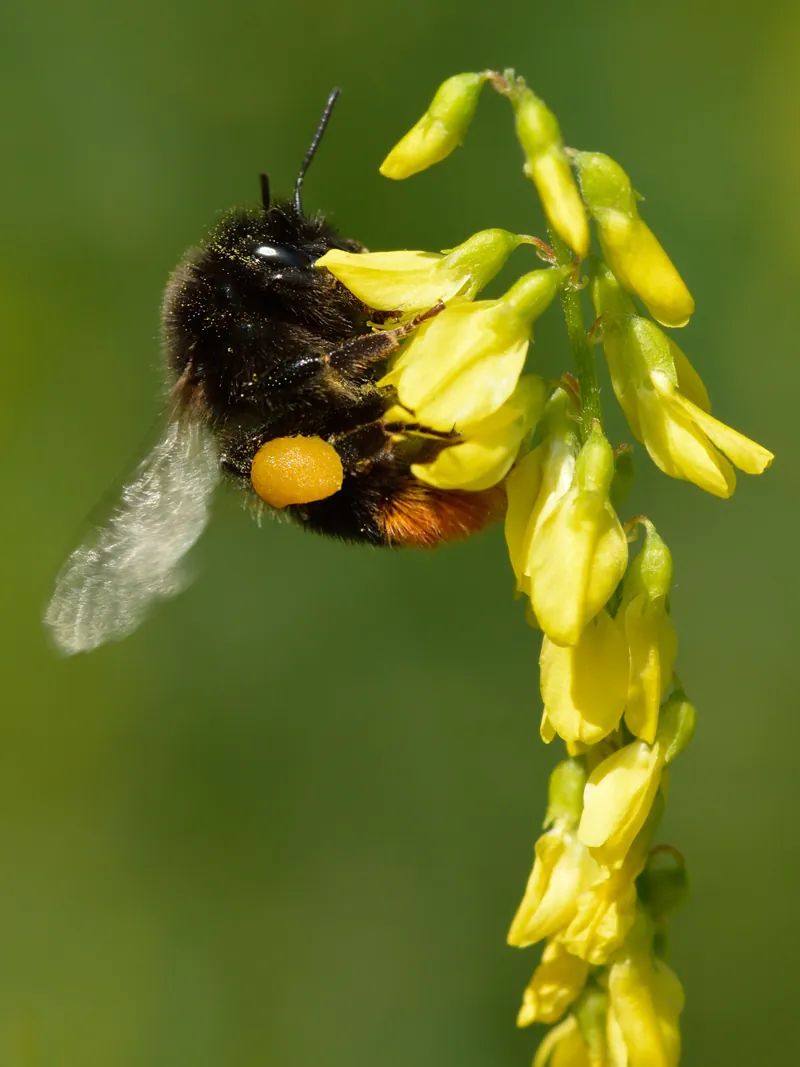
Yellow sweet clover is a tall legume of roadsides, waste ground, gravel pits and river gravels, classed as an archaeophyte in Switzerland. Info Flora gives June to October as its flowering period. Polish researchers describe it as an attractive and productive nectar plant and used coumarin as a marker for its honey.
What we know
Bees linked to this plant
How to recognise it
When it flowers
Where it grows
In Switzerland it grows on roadsides, waste ground, in gravel pits and on river gravels, from the colline to the montane and occasionally subalpine zone.
Confirmed fact[1]Info Flora assigns it to the habitat type mesophilous ruderal vegetation, the sweet clover community Dauco-Melilotion.
Confirmed fact[1]
What it offers bees
Honey
A study of nine yellow sweet clover honeys from south-eastern Poland selected coumarin as a potential chemical marker for this honey.
Confirmed fact[3]
People
Info Flora classes yellow sweet clover as an archaeophyte, present in the region before 1500, with a Eurasian distribution and no Red List concern.
Confirmed fact[1]German direct-payment rules list Melilotus officinalis among the pollen- and nectar-rich species allowed on fallow land used for honey plants.
Confirmed fact[5]
Sources
- Info Flora, das nationale Daten- und Informationszentrum der Schweizer Flora. Species page: Melilotus officinalis (L.) Lam. Description text from Flora Helvetica (2018); habitat types from Delarze et al. (2015). Accessed 29 Oct 2026. Link
- Pladias, Database of the Czech Flora and Vegetation. Taxon data: Melilotus officinalis. Accessed 29 Oct 2026. Link
- Jasicka-Misiak, I., Makowicz, E. & Stanek, N. (2017). Polish Yellow Sweet Clover (Melilotus officinalis L.) Honey, Chromatographic Fingerprints, and Chemical Markers. Molecules 22(1): 138. Link
- Bees, Wasps and Ants Recording Society (BWARS). Melitta leporina species account. Link
- Direktzahlungen-Durchführungsverordnung (DirektZahlDurchfV), Anlage 5 (zu § 32a Absatz 2 Satz 1 und Absatz 3): Zulässige Arten auf für Honigpflanzen genutztem brachliegendem Land. Bundesministerium der Justiz, gesetze-im-internet.de. Fundstelle BAnz AT 29.03.2018 V1. Link
- Bees, Wasps and Ants Recording Society (BWARS). Andrena wilkella (Kirby, 1802) species account. Link
Last checked: 30 October 2026. Every statement on this page was compared with the source it cites.