Bee plant, Central Europe
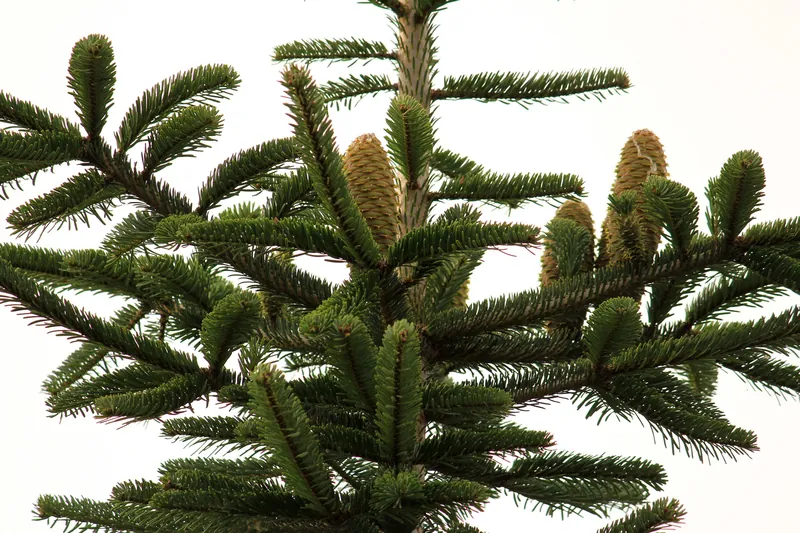
Abies alba
Silver fir, European silver fir
Silver fir is a wind pollinated conifer of deep soil montane forests, flowering in May, and offers bees honeydew rather than nectar. The fir aphids Cinara pectinatae and Cinara confinis are the honeydew producers that matter to beekeepers; honeybees turn their honeydew into fir honey, a strongly aromatic forest honey. Fir honeydew is low in melezitose compared with spruce aphid honeydew.
What we know
Bees linked to this plant
- Apis mellifera
collects honeydew of the fir aphid Cinara pectinatae on silver fir; basis of fir honey (Tannenhonig)
Confirmed fact[3]
How to recognise it
When it flowers
Info Flora gives the flowering month of silver fir in Switzerland as May.
Confirmed fact[1]
Where it grows
In Switzerland silver fir grows in forests with deep soil in the montane and partly subalpine belt.
Confirmed fact[1]
What it offers bees
The German bee institutes' newsletter names the green fir aphid Cinara pectinatae and the large black-brown fir bark aphid Cinara confinis as the honeydew producers of primary importance for beekeeping on silver fir.
Confirmed fact[3]Because these fir aphids multiply more slowly, a mass outbreak can often be estimated already in the previous autumn from the overwintering eggs they have laid.
Confirmed fact[3]
Honey
The Baden-Wuerttemberg bee forage catalogue names firs and spruces as the main pure honeydew suppliers, with pollen free flows that often fall in the lean second half of summer.
Confirmed fact[2]In mid June 2022 a bee institute newsletter from Freiburg reported that fir had regionally started to yield honeydew at the western edge of the Black Forest.
Reported by the farm[4]A PLOS ONE study in Baden-Wuerttemberg sampled fir honeydew from the aphids Cinara pectinatae and Cinara confinis and calls these hemipterans important honeydew producers on conifers in Germany.
Confirmed fact[5]In that study, honeydew of the fir aphids Cinara pectinatae and Cinara confinis contained much lower proportions of melezitose than honeydew of the spruce aphid Cinara piceae.
Confirmed fact[5]The LAVES bee institute in Celle lists fir among the flows that give honey an intense aroma, together with lime, sweet chestnut, heather and spruce.
Confirmed fact[6]
Sources
- Info Flora (2018+). Abies alba Mill.. Online flora of Switzerland (descriptions from Flora Helvetica 2018). Info Flora, Geneva/Bern. Link
- Ministerium fuer Laendlichen Raum und Verbraucherschutz Baden-Wuerttemberg (2019). Bienenweidekatalog. 6. aktualisierter Nachdruck, Oktober 2019 (Drucknummer 14-2019-24). Stuttgart. Link
- Fischer, J. (2023). Am Bienenstand: Honigtautracht. Bienen@Imkerei 16/2023, 19.06.2023. Joint newsletter of the German bee institutes (DLR Fachzentrum Bienen und Imkerei Mayen, LWG Institut fuer Bienenkunde und Imkerei Veitshoechheim, LLH Bieneninstitut Kirchhain, Landesanstalt fuer Bienenkunde Hohenheim, Laenderinstitut fuer Bienenkunde Hohen Neuendorf, LWK NRW). Link
- Binder-Koellhofer, B. (2022). Waldhonig - etwas ganz Besonderes. Bienen@Imkerei 16/2022, 17.06.2022. Joint newsletter of the German bee institutes (DLR Fachzentrum Bienen und Imkerei Mayen, LWG Veitshoechheim, LLH Bieneninstitut Kirchhain, Landesanstalt fuer Bienenkunde Hohenheim, Laenderinstitut fuer Bienenkunde Hohen Neuendorf, LWK NRW). Link
- Shaaban, B., Seeburger, V., Schroeder, A., Lohaus, G. (2020). Sugar, amino acid and inorganic ion profiling of the honeydew from different hemipteran species feeding on Abies alba and Picea abies. PLoS ONE 15(1): e0228171. doi:10.1371/journal.pone.0228171 Link
- von der Ohe, W., Janke, M., Campbell, S. N., von der Ohe, K. Was ist ein Sortenhonig? Das Bieneninstitut Celle informiert (44). LAVES Institut fuer Bienenkunde Celle. Link
Last checked: 30 October 2026. Every statement on this page was compared with the source it cites.