Decision 05 of 8
Where the bees come from
Which bee to choose, what to buy, when to buy it, and which papers must travel with a colony in Germany, in Austria's Länder and in Switzerland.
Applies to: Beginning beekeepers in Germany, Austria and Switzerland; honey bees, Apis mellifera Region: Germany, Austria, Switzerland
Decide first: Choosing the hive and the frame: a decision for years, Where to put an apiary
This decision fixes: which subspecies or line the apiary starts with, which later fixes queen rearing, drone neighbourhood and, in Carinthia, legal compliance; whether the first season starts with a nucleus, a package, a swarm or a full colony, which fixes how much honey and how much feeding to expect in year one; how many colonies to start with and in which month; which health certificate or notification is needed before the bees move to the new site
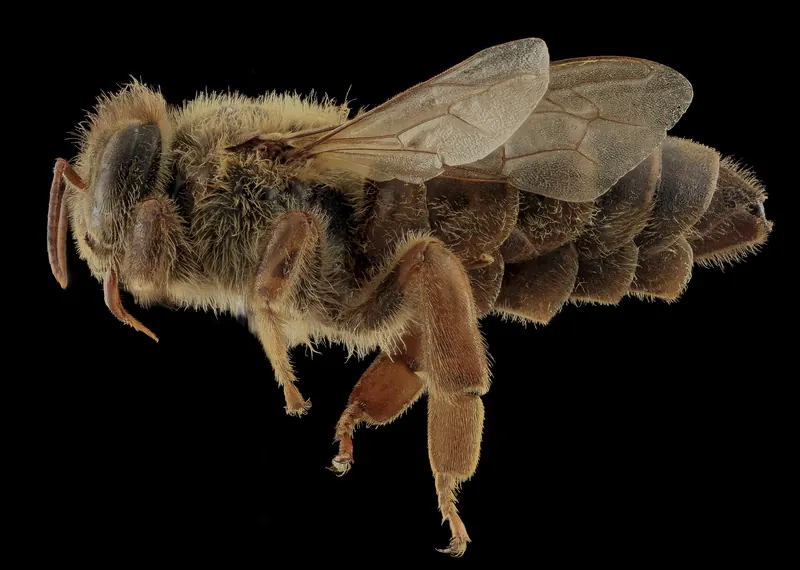
Which bees live in Germany, Austria and Switzerland
In Bavaria the Carnica bee, Apis mellifera carnica, also called the Carniolan or grey bee, is the most widely kept race, according to the state bee institute's beginner course.Confirmed fact, source 1 The originally native honey bee of the region was the Dark bee, Apis mellifera mellifera, the same Bavarian course notes.Confirmed fact, source 1 Buckfast is a race hybrid of Apis mellifera, with its origin at Buckfast Abbey in southern England, according to the Bavarian course.Confirmed fact, source 1 In Upper Austria the Carnica is called the native race: the Land's page on its beekeeping law describes mating stations that serve the pure breeding of queens and drones of the native Carnica race.Confirmed fact, source 14 The Swiss research institute FiBL describes the Dark bee as the only honey bee originally native north of the Alps and in northern and eastern Europe, with good cold tolerance.Confirmed fact, source 11
Switzerland's mix, and how to choose a line
A 2021 Agroscope report for the Swiss Federal Office for the Environment states that Apis mellifera mellifera is the native honey bee subspecies in Switzerland north of the Alps.Confirmed fact, source 10 The Carnica was introduced into Switzerland around 1950 and is today the most prominent subspecies bred there, the same report says.Confirmed fact, source 10 Buckfast bees spread in Switzerland in the 1980s, and many managed Swiss colonies today are hybrids, known as the Swiss Mix.Confirmed fact, source 10 An estimate cited in the report puts pure Dark bee colonies in Switzerland at about 5,000, roughly 3 percent of all colonies; the report stresses that exact figures by race do not exist.Statistical estimate, source est. 10 The Bavarian institute's practical rule for beginners is to choose a race that is also kept in the neighbourhood, because the race around the apiary influences natural mating.Confirmed fact, source 2 In Carinthia, Austria, keeping bees that are not of the Carnica race without a permit under section 11 of the Carinthian Beekeeping Act is a punishable offence.Confirmed fact, source 13
What to buy: nucleus, package, swarm or full colony
A nucleus colony (Ableger) made in the current year is the cheapest way in, but the Bavarian institute warns it brings no significant honey crop in its first season.Confirmed fact, source 2 Some clubs are glad to give beginners a young colony, a nucleus, according to a Bavarian bee centre guide for school apiaries.Confirmed fact, source 3 The Mayen bee institute advises buying colonies together with their combs and brood nest, inspected with the seller at the seller's apiary; a colony purchase is a matter of trust.Confirmed fact, source 7 Package bees (Kunstschwärme) sold online in spring with a supposedly current-year mated queen should be viewed critically; packages with young queens from German apiaries are only available in summer.Confirmed fact, source 7 The Bavarian institute warns that the health status of a swarm of unknown origin is unclear and that strange swarms need special attention to health.Confirmed fact, source 4
Buy locally, buy in spring, and start with more than one
Local clubs, district associations and teaching apiaries in Germany often run bee markets or exchanges where production colonies, nuclei and queens can be bought.Confirmed fact, source 1 The Bavarian institute's disease prevention sheet puts it in three words: no bee imports. The Mayen institute agrees that colonies from other countries should be off limits.Confirmed fact, source 4 In Switzerland importing bees is legally possible but, as the Valais veterinary service puts it, strongly discouraged; imports follow a very strict procedure and the bees go into quarantine on arrival.Confirmed fact, source 16 The Bavarian institute recommends buying colonies in spring, so that a beginner does not carry the risk of overwintering in the very first months.Confirmed fact, source 1 The same institute suggests three to five units for a start, and a school apiary guide says two colonies rather than one, because some interventions need a second colony.Confirmed fact, source 2
Papers that travel with the bees
In Germany, section 5 of the Bee Disease Ordinance requires a certificate from the official veterinarian of the place of origin for colonies moved elsewhere, presented promptly to the authority at the new site.Confirmed fact, source 9 The German certificate must show the bees were found free of American foulbrood and that the origin is not in a foulbrood restriction zone; it may not be older than nine months.Confirmed fact, source 9 In Austria, migratory certificates are a matter of Land law. Burgenland's Beekeeping Act (1965) requires a certificate of freedom from disease from the official veterinarian, not older than nine months and valid only for the year of issue, to be filed with the mayor before migratory colonies are set up.Confirmed fact, source 12 In Switzerland the federal Animal Disease Ordinance (Art. 19a TSV) requires a beekeeper to notify the bee inspectors of the old and the new site before moving bees into another inspection district; the canton of St. Gallen wants its form at least three working days ahead, Graubünden asks for ten days' written notice.Confirmed fact, source 15
What a healthy nucleus looks like
A sure sign of a laying queen, says the Bavarian institute, is eggs still standing upright in the cells: she was in the colony at least very recently.Confirmed fact, source 5 A patchy brood nest is the most common visible sign of brood disease, and a new colony should have a young queen, according to the Bavarian guide on acquiring bees.Confirmed fact, source 2 Fresh eggs and young brood are the first good signs after a queen starts laying; only a closed brood nest at a later check confirms that the new colony is successfully queenright, the Veitshöchheim institute writes.Confirmed fact, source 8 The Bavarian standard for young colonies sold to customers asks for a first-year queen in lay, five occupied combs in June or eight in July, and at least 2.5 kg of stores at handover in summer.Confirmed fact, source 6 The same standard requires that young colonies show no recognisable signs of disease, and the Mayen institute notes that a new queen's mating success is checked by her first capped brood.Confirmed fact, source 6
The chain of decisions
- 01Why keep bees, and how many colonies to start withthe first decision
- 02Learning before the first beeafter: Why keep bees, and how many colonies to start with
- 03Where to put an apiaryafter: Why keep bees, and how many colonies to start with
- 04Choosing the hive and the frame: a decision for yearsafter: Why keep bees, and how many colonies to start with; Learning before the first bee
- 05Where the bees come fromafter: Choosing the hive and the frame: a decision for years; Where to put an apiary
- 06Equipment and the first budget: what you need and what it costsafter: Choosing the hive and the frame: a decision for years; Why keep bees, and how many colonies to start with
- 07Registration and the law: what must happen before and after the first beesafter: Where to put an apiary; Where the bees come from
- 08The first season: what the first year looks likeafter: Where the bees come from; Registration and the law: what must happen before and after the first bees; Equipment and the first budget: what you need and what it costs
Sources
- Bayerische Landesanstalt für Weinbau und Gartenbau (LWG), Institut für Bienenkunde und Imkerei, Veitshöchheim. Schulungsunterlagen Basisteil, Anfängerkurs Bienenhaltung (undated PDF). Link
- Bayerische Landesanstalt für Weinbau und Gartenbau (LWG), Fachzentrum Bienen, Veitshöchheim. Beschaffung von Bienen (Wie komme ich zu Bienen?) (undated PDF). Link
- Bayerische Landesanstalt für Weinbau und Gartenbau (LWG), Fachzentrum Bienen, Veitshöchheim. Bienen in der Schule: Grundüberlegungen und Vorarbeiten (undated PDF). Link
- Bayerische Landesanstalt für Weinbau und Gartenbau (LWG), Fachzentrum Bienen, Veitshöchheim. Vorbeugemaßnahmen: Bienenkrankheiten, section Bienen beschaffen (undated PDF). Link
- Bayerische Landesanstalt für Weinbau und Gartenbau (LWG), Fachzentrum Bienen, Veitshöchheim. Beurteilung der Königinnensituation: Ist das Volk weiselrichtig? (undated PDF). Link
- Bayerische Landesanstalt für Weinbau und Gartenbau (LWG), Fachzentrum Bienen, Veitshöchheim. Standard-Vermehrungsbetrieb: Standard Jungvolkbildung (undated PDF). Link
- Otten, C. (DLR Westerwald-Osteifel, Fachzentrum Bienen und Imkerei, Mayen) et al. Bienen@Imkerei Infobrief 03/2024: Völkerkauf und Seuchenfreiheitsbescheinigungen, 7 March 2024. Link
- Müller-Engler, G. (LWG Institut für Bienenkunde und Imkerei, Veitshöchheim). Alles neu macht der Mai! Neue Bienenvölker, neue Königinnen! Bienen@Imkerei Infobrief 13/2022, 27 May 2022. Link
- Bienenseuchen-Verordnung (BienSeuchV), § 5 Verbringen von Bienenvölkern. Bundesministerium der Justiz, gesetze-im-internet.de, current consolidated text. Link
- Parejo, M., Dietemann, V., Praz, C. (2021, online version 15 Dec 2023). Der Status freilebender Völker der Dunklen Honigbiene (Apis mellifera mellifera) in der Schweiz: Literatursynthese und Expertenempfehlungen. Agroscope and Infofauna-CSCF for the Bundesamt für Umwelt (BAFU). Link
- Forschungsinstitut für biologischen Landbau (FiBL), Frick. Medienmitteilung: Aggressivere Bienen haben die Rüsselchen vorn, 5 April 2022. Link
- Burgenländisches Bienenzuchtgesetz, LGBl. Nr. 14/1965 idF LGBl. Nr. 5/1970, § 11 Anmeldung der Zuwanderung. Rechtsinformationssystem des Bundes (RIS). Link
- Kärntner Bienenwirtschaftsgesetz (K-BiWG), LGBl. Nr. 63/2007 idF LGBl. Nr. 85/2013, § 17 Strafbestimmungen. Rechtsinformationssystem des Bundes (RIS). Link
- Land Oberösterreich. Bienenzuchtrecht (official web page on the Upper Austrian beekeeping law, undated). Link
- Kanton St. Gallen, Amt für Verbraucherschutz und Veterinärwesen (AVSV), Veterinärdienst. Bienenverkehr innerhalb der Schweiz (form and notes on Art. 19a TSV, undated PDF). Link
- Canton du Valais, Service de la consommation et affaires vétérinaires (SCAV). Apiculture (official web page, undated). Link
Last checked: 21 October 2026. Every statement in this article was compared with the source it cites. Spotted an error? Report it.