Rules for beekeepers in Germany, Austria and Switzerland
Keeping even one honey bee colony comes with legal duties: registering your bees and reporting certain brood diseases to the authorities at once.
Applies to: Apis mellifera (western honey bee) kept by people; the diseases named affect honey bee brood or colonies. Region: Germany, Austria and Switzerland only. Rules are national, with cantonal offices in Switzerland and district authorities in Germany and Austria carrying them out, and they change; Austria's bee disease rules changed on 1 July 2024. Always check with your local authority.
Germany: register before you start
Under the German Bee Disease Regulation, anyone who wants to keep bees must notify the competent authority no later than when they start.Confirmed fact, source 1 The notice must state how many colonies you keep and where they stand.Confirmed fact, source 1 The authority records each beekeeping operation and gives it a registration number.Confirmed fact, source 1 The competent authority is usually the district veterinary office; during an outbreak in August 2023, for example, the Berlin-Lichtenberg veterinary and food inspection office asked all unregistered bee holdings to register there without delay.Confirmed fact, source 2
Germany: American foulbrood is notifiable
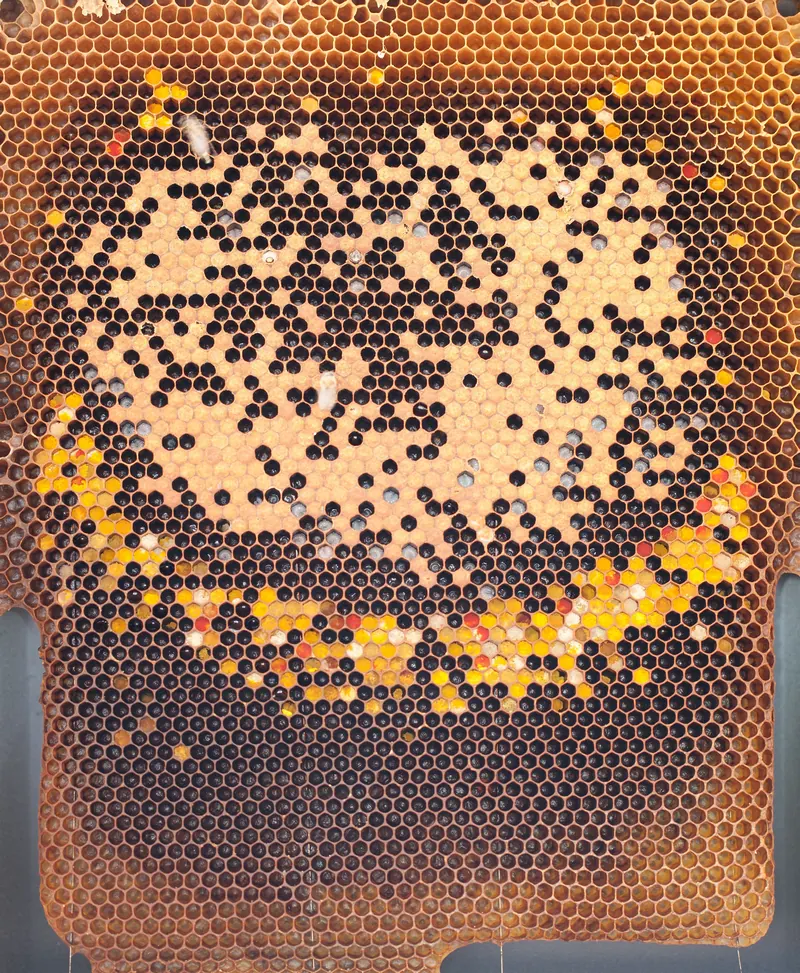
American foulbrood is listed as a notifiable animal disease both in the German notifiable diseases ordinance and in the Bee Disease Regulation.Confirmed fact, source 3 Even a mere suspicion must be reported, without delay, to the responsible veterinary office or official veterinarian.Confirmed fact, source 3 The disease is caused by the bacterium Paenibacillus larvae, whose spores stay infectious for decades.Confirmed fact, source 4 The bacteria multiply only in honey bee brood; adult bees cannot fall ill with it.Confirmed fact, source 3 Once an outbreak is officially confirmed, the authority declares a restricted zone of at least one kilometre around the apiary.Confirmed fact, source 1
Germany: moving colonies
When colonies are moved to a new site in Germany, the keeper must show the new site's authority a certificate from an official veterinarian.Confirmed fact, source 1 The certificate must confirm that the bees were found free of American foulbrood.Confirmed fact, source 1 The certificate may be no older than nine months.Confirmed fact, source 1
Austria: registration and the Animal Health Act 2024
Austrian beekeepers must register their apiary sites in the national Veterinary Information System, starting from a single colony.Confirmed fact, source 5 Beekeepers must also report how many hives they kept on 31 October, by 31 December of that year.Confirmed fact, source 5 Since 1 July 2024, Austria's Animal Health Act 2024 has replaced the old Bee Disease Act. It treats as bee diseases those listed for honey bees in EU Implementing Regulation 2018/1882, and it has special rules for American foulbrood; varroosis counts only when it occurs as an epidemic.Confirmed fact, source 6 Under the Animal Health Act 2024, keepers must report a well-founded suspicion of such an animal disease to the authority as soon as possible.Confirmed fact, source 9
Switzerland: registration and the bee inspector
In Switzerland, keeping bees must be registered with a cantonal coordination office.Confirmed fact, source 7 Swiss law classes American foulbrood (Faulbrut) as an animal disease to be controlled, which makes it notifiable; it is not dangerous to people.Confirmed fact, source 8 Swiss keepers must report a suspicion of foulbrood immediately to their bee inspector.Confirmed fact, source 8 European foulbrood is also a notifiable bee disease in Switzerland.Confirmed fact, source 7 According to the federal food safety office, the national Bee Health Service was created in 2012 and is funded jointly by the federal government, the cantons and the beekeeping sector. The service itself lists a free hotline.Confirmed fact, source 10
Sources
- Bienenseuchen-Verordnung (BienSeuchV), Germany, in the version of the announcement of 3 November 2004, last amended by Art. 7 of the Ordinance of 17 April 2014. Gesetze im Internet, Federal Ministry of Justice. Link
- Bezirksamt Lichtenberg von Berlin, Veterinär- und Lebensmittelaufsicht. Ausbruch der Amerikanischen Faulbrut in Lichtenberg. Press release, 14 August 2023. Link
- Boecking, O. & Aumeier, P. (2019). Praxisleitfaden zur Bekämpfung der Amerikanischen Faulbrut. LAVES Institut für Bienenkunde Celle, Niedersächsisches Landesamt für Verbraucherschutz und Lebensmittelsicherheit, December 2019. Link
- Friedrich-Loeffler-Institut (FLI). Amtliche Methode und Falldefinition: Amerikanische Faulbrut (Erreger: Paenibacillus larvae). Stand 25.11.2020. Via OpenAgrar. Link
- Land Oberösterreich, Bezirkshauptmannschaft Kirchdorf. Registrierungspflicht für Imkerinnen und Imker (web page), citing Tierkennzeichnungs- und Registrierungsverordnung, BGBl. II Nr. 193/2015. Link
- Tiergesundheitsgesetz 2024 (TGG 2024), Austria, BGBl. I Nr. 53/2024, § 3 Abs. 2 Z 11 and § 52 (Faulbrut); in force since 1 July 2024; § 79 Z 4 repeals the Bienenseuchengesetz BGBl. Nr. 290/1988. Rechtsinformationssystem des Bundes (RIS). Link
- Federal Food Safety and Veterinary Office (BLV/FSVO), Switzerland. Bienen (web page). Link
- Federal Food Safety and Veterinary Office (BLV/FSVO), Switzerland. Faulbrut der Bienen (web page); legal basis Art. 269 to 272 Tierseuchenverordnung (TSV). Link
- Tiergesundheitsgesetz 2024 (TGG 2024), Austria, BGBl. I Nr. 53/2024, § 36 Meldepflichten. Rechtsinformationssystem des Bundes (RIS). Link
- Bienengesundheitsdienst (BGD), apiservice, Switzerland. Über uns / apiservice (web page). Link
Last checked: 20 October 2026. Every statement in this article was compared with the source it cites. Spotted an error? Report it.