Megachilidae
Osmia bicornis
Red mason bee, Red mortar bee
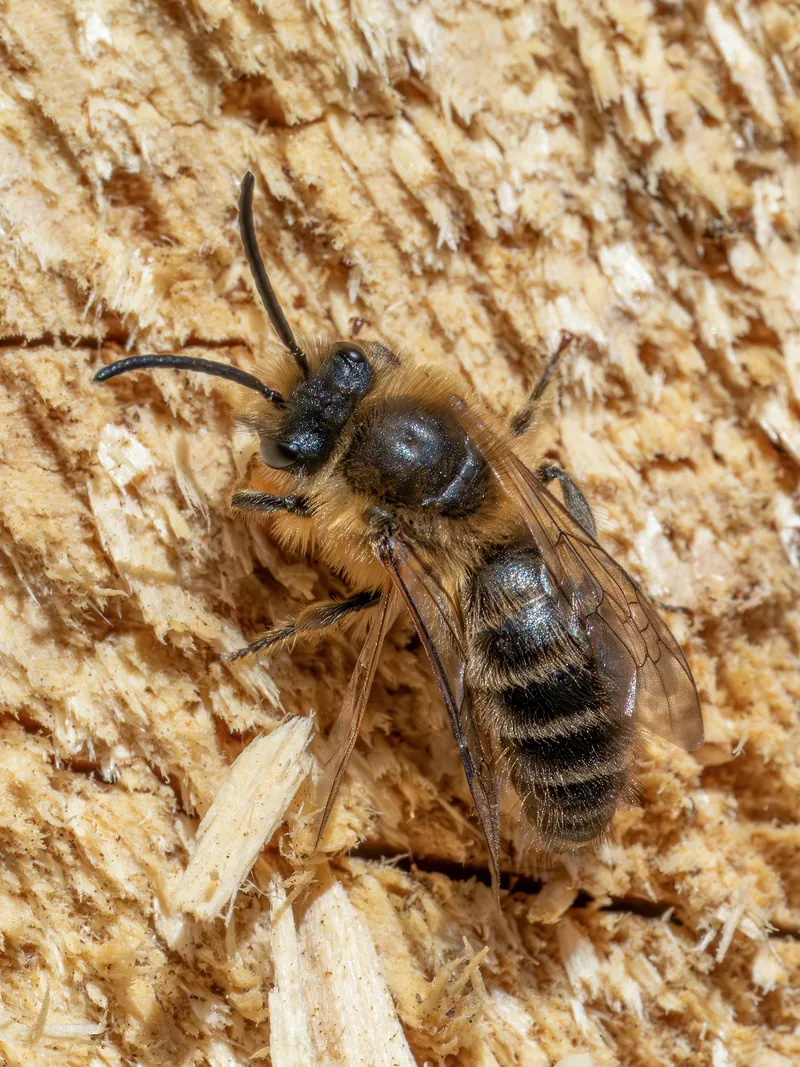
A familiar spring-flying solitary bee found across much of Europe, North Africa and Asia east to Japan. Females nest in all kinds of existing holes, from beetle burrows and hollow stems to door locks and bee hotels, sealing cells with mud. Adults overwinter inside cocoons and emerge in spring, when they are valued pollinators of fruit blossom.
What we know
How to recognise it
It is sometimes called the red mortar bee because females can excavate soft mortar joints, which over time may weaken masonry.
Confirmed fact[1]
Where it lives
Life cycle and colony
There is one generation a year, flying from April, or occasionally late March, to June and sometimes July.
Confirmed fact[1]Males usually emerge about two weeks before the females.
Confirmed fact[2]The bees pass the winter as fully formed adults inside tough reddish-brown silk cocoons and emerge the following spring.
Confirmed fact[1]Adult females can live for up to five to six weeks.
Confirmed fact[5]
Nest
Females nest in pre-existing cavities of many shapes and sizes; recorded sites include key holes, pocket watches, flutes, glass tubes and empty snail shells.
Confirmed fact[3]The partitions between cells and the final nest plug are made of mud.
Confirmed fact[3]Mud is carried to the nest as pellets held in the jaws and tamped into place with two conspicuous prong-like projections on the female's face.
Confirmed fact[1]
Flowers and food
Behaviour
Males do not defend territories but search for females within overlapping home ranges centred on food plants, a mating system described as scramble competition polygyny.
Confirmed fact[4]
Bees and people
It readily nests in cut bamboo stems or cardboard tubes, is an important wild pollinator of fruit trees, and has potential as a managed pollinator of fruit crops.
Confirmed fact[2]
Where it has been recorded
Each hexagon contains at least one record of Osmia bicornis shared with GBIF: museum specimens, surveys and photographs.
110,730 records
- Netherlands48,116
- Germany17,078
- United Kingdom13,694
- Belgium9,225
- Switzerland7,991
- Sweden4,806
GBIF.org occurrence data for taxon key 5039315, retrieved 2026-10-19. Observation[6]
Records show where the bee has been found and reported, not its full range or its abundance. Isolated points far from the main cluster can be misidentifications, captive or imported bees, or genuine rare finds.
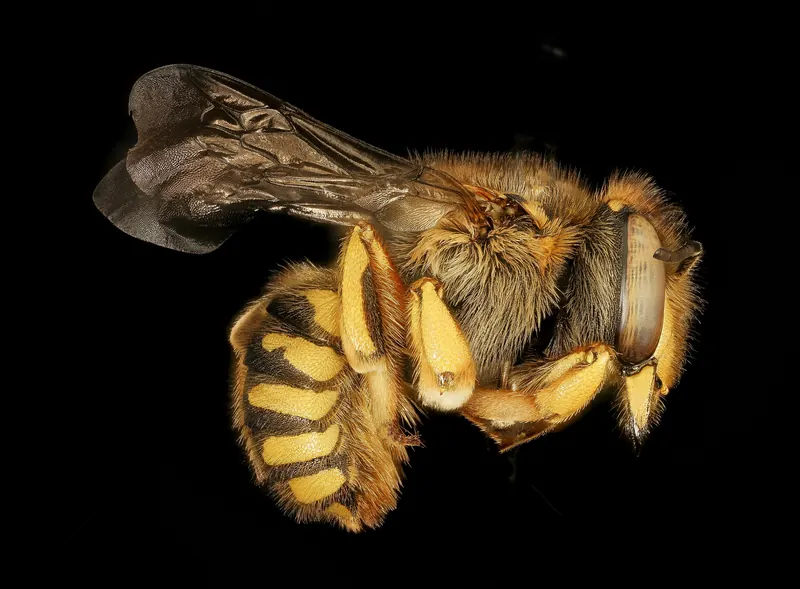
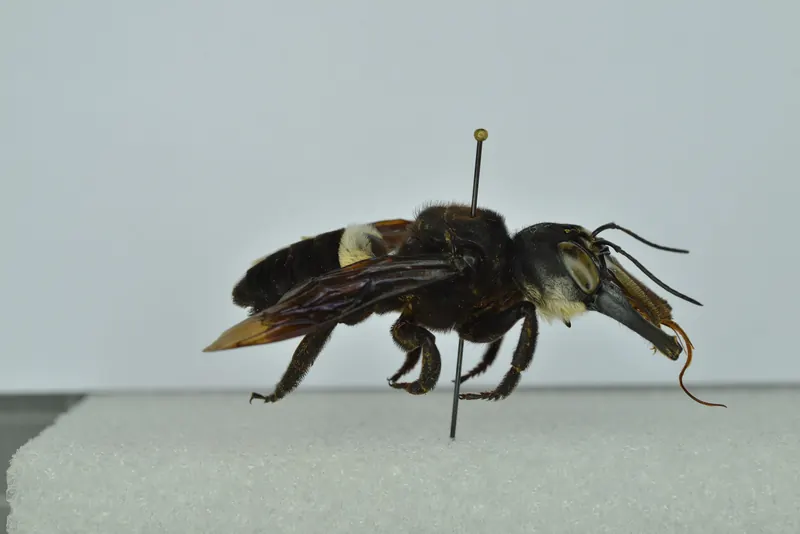
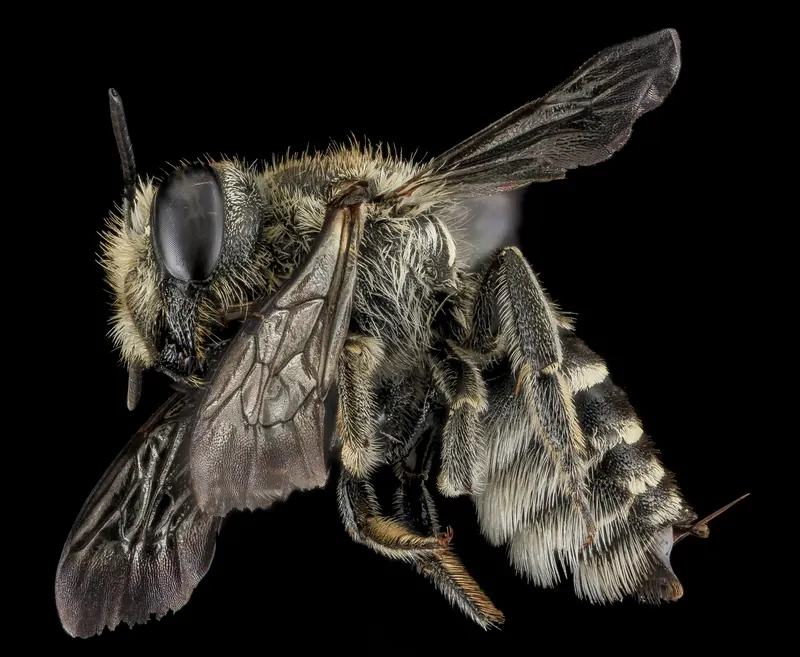
More from this part of the bee family tree
Sources
- BWARS (Bees, Wasps and Ants Recording Society). Osmia bicornis (Linnaeus, 1758). Species account, BWARS website. Link
- Roberts, S. & Dean, R. (2012). Red Mason-bee (Osmia bicornis). Information Sheet 4, March 2012. Hymettus Ltd and BWARS. Link
- Muller, A. (ongoing). Palaearctic Osmiine Bees: Systematics and Biology of a Fascinating Group of Solitary Bees. Subgenus Osmia s. str., species account Osmia bicornis. ETH Zurich. Link
- Seidelmann, K. (1999). The Race for Females: The Mating System of the Red Mason Bee, Osmia rufa (L.) (Hymenoptera: Megachilidae). Journal of Insect Behavior 12: 13-25. doi:10.1023/A:1020920929613 Link
- Szentgyorgyi, H. & Woyciechowski, M. (2013). Cocoon orientation in the nests of red mason bees (Osmia bicornis) is affected by cocoon size and available space. Apidologie 44(3): 334-341. doi:10.1007/s13592-012-0185-2 Link
- GBIF.org (2026). Occurrence search and density maps for Osmia bicornis, taxon key 5039315. Link
Last checked: 30 October 2026. Every statement on this page was compared with the source it cites. Spotted an error? Report it.