Apidae
Habropoda laboriosa
Southeastern blueberry bee, Blueberry digger bee
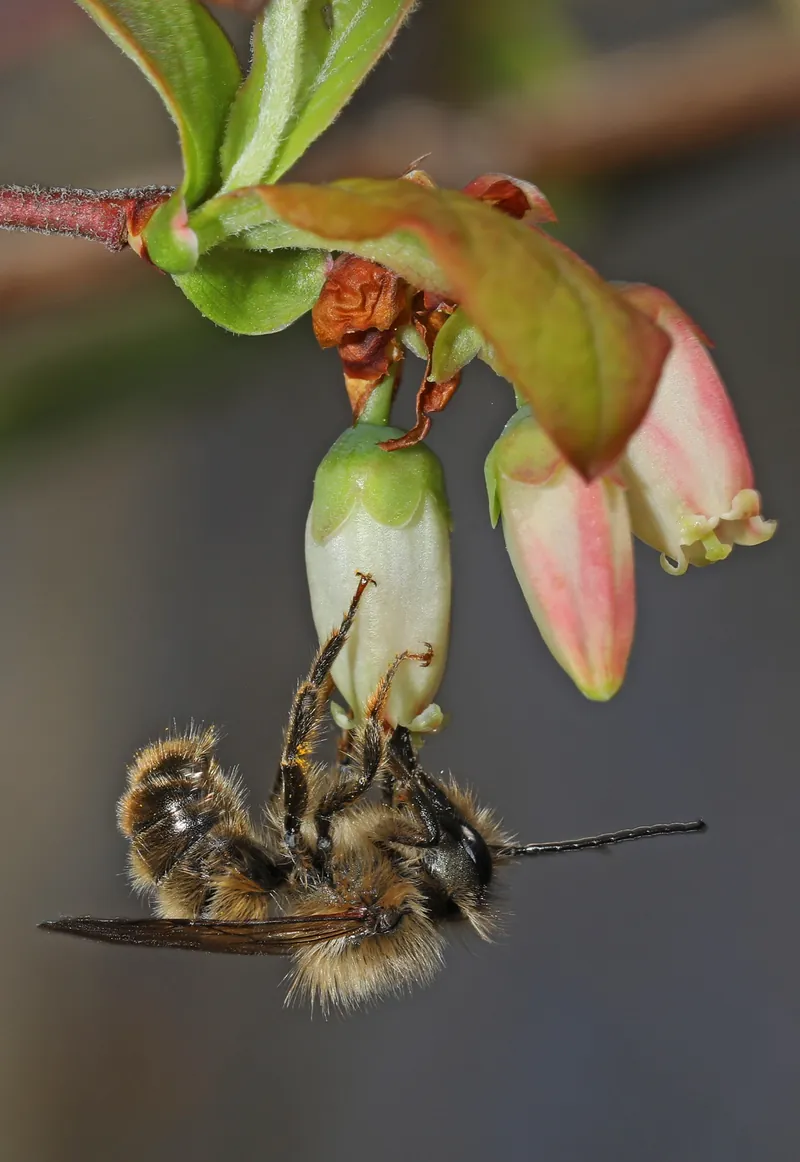
The southeastern blueberry bee is a solitary ground-nesting bee of the eastern United States that flies in early spring, when blueberries bloom. Females buzz blueberry flowers to shake out pollen and collect it mainly from Vaccinium. A typical female accounts for roughly 6,000 blueberries in her lifetime.
What we know
How to recognise it
Where it lives
Despite its common name it is not limited to the Southeast: it ranges from New Jersey south into Florida and west into Illinois and Mississippi.
Confirmed fact[1]
Life cycle and colony
It is a solitary bee, although females may dig their nests close together in groups.
Confirmed fact[1]In Georgia and Alabama it flies from February through April.
Confirmed fact[2]It has one generation a year, with adults active in spring; where it occurs it can be locally abundant.
Confirmed fact[2]The bees spend the winter in their underground nests; the larvae develop inside their sealed cells without spinning cocoons.
Confirmed fact[1]
Nest
The female chooses a nest site, usually in sandy soil near blueberry plants.
Confirmed fact[1]
Flowers and food
Behaviour
Pollen-collecting females buzz rabbiteye blueberry flowers to release pollen, averaging 5.7 buzzes in a flower visit of about 2.6 seconds, three times faster than bumble bees foraging alongside them.
Confirmed fact[2]Pollen shaken loose by buzzing collects on the underside of the head in both sexes, which is the usual spot where the stigma of a rabbiteye blueberry flower touches the bee.
Confirmed fact[2]
Bees and people
A typical female blueberry bee accounts for roughly 6,000 blueberries over her lifetime.
Statistical estimate[1]
Where it has been recorded
Each hexagon contains at least one record of Habropoda laboriosa shared with GBIF: museum specimens, surveys and photographs.
4,434 records
- United States4,434
GBIF.org occurrence data for taxon key 1345188, retrieved 2026-10-19. Observation[3]
Records show where the bee has been found and reported, not its full range or its abundance. Isolated points far from the main cluster can be misidentifications, captive or imported bees, or genuine rare finds.
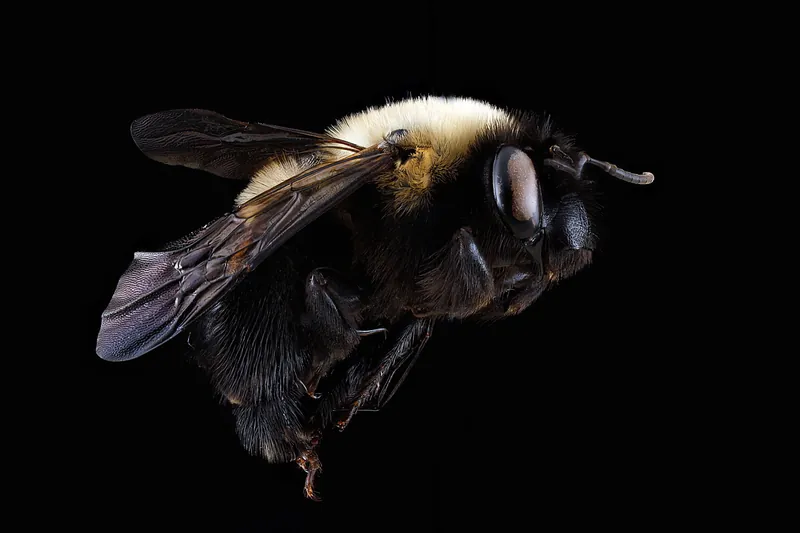
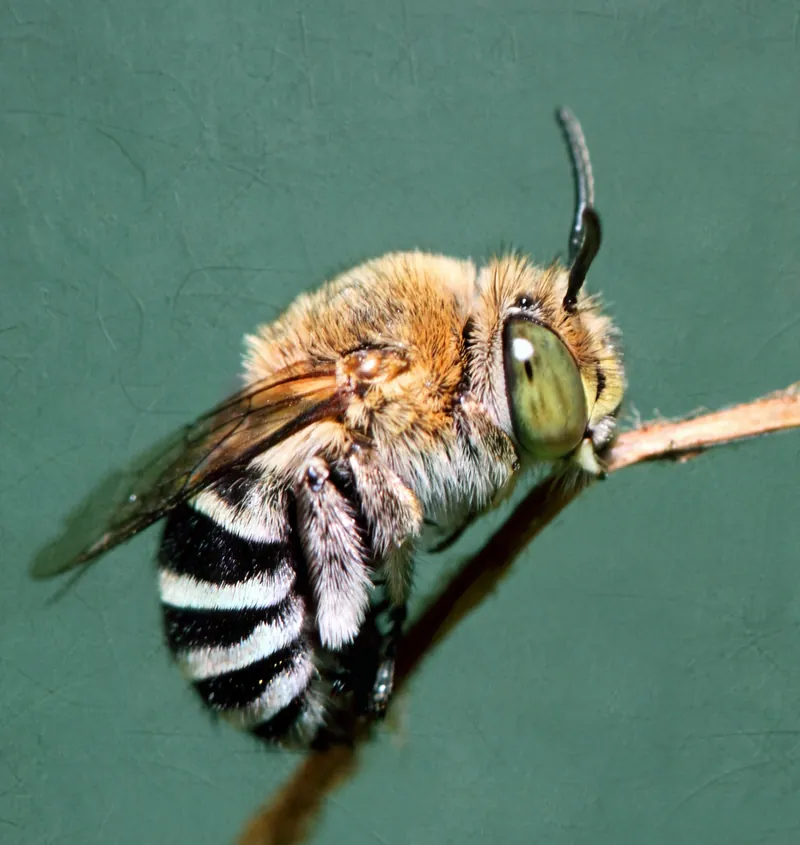
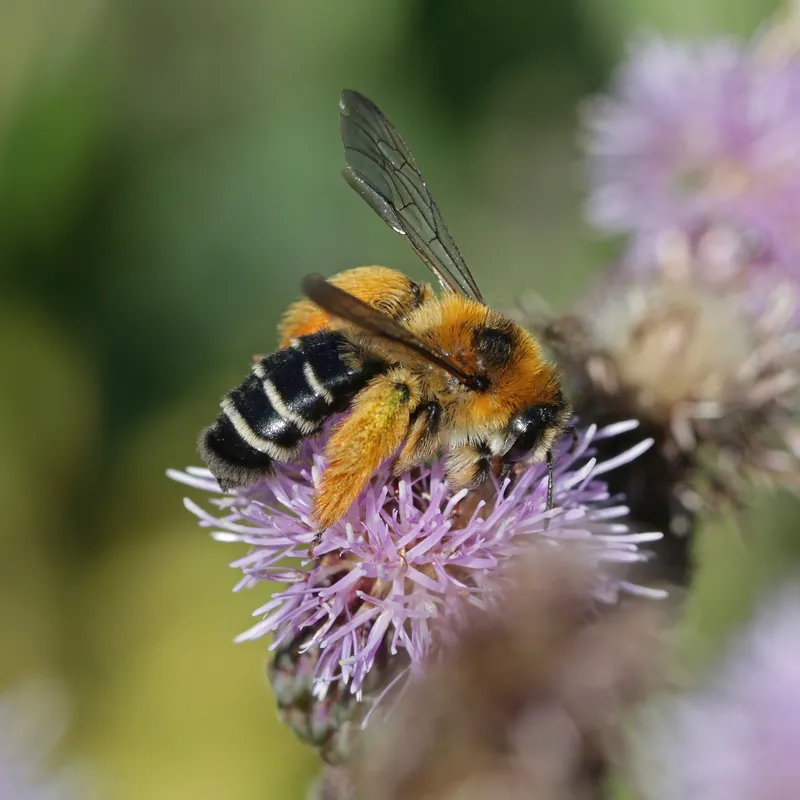
More from this part of the bee family tree
Sources
- Ryan, A.J., Prouty, C. and Jack, C.J. (2026). Southeastern Blueberry Bee Habropoda laboriosa (Insecta: Hymenoptera: Apidae). EENY-827, Department of Entomology and Nematology, UF/IFAS Extension, University of Florida. doi:10.32473/edis-IN1474-2026. Link
- Cane, J.H. and Payne, J.A. (1988). Foraging ecology of the bee Habropoda laboriosa (Hymenoptera: Anthophoridae), an oligolege of blueberries (Ericaceae: Vaccinium) in the southeastern United States. Annals of the Entomological Society of America 81(3): 419-427. Abstract read on the publisher's site. Link
- GBIF.org (2026). Occurrence search and density maps for Habropoda laboriosa, taxon key 1345188. Link
Last checked: 30 October 2026. Every statement on this page was compared with the source it cites. Spotted an error? Report it.