Apidae
Eucera longicornis
Long-horned bee
A solitary bee of flower-rich grassland whose males carry extraordinarily long antennae. It flies from mid-May to mid-July, nests in burrows in bare or eroded soil, and provisions its young mainly with pollen from pea-family plants, which made up about 90 percent of pollen loads in a Gatwick study. It is widespread across Eurasia but rare and declining in Britain.
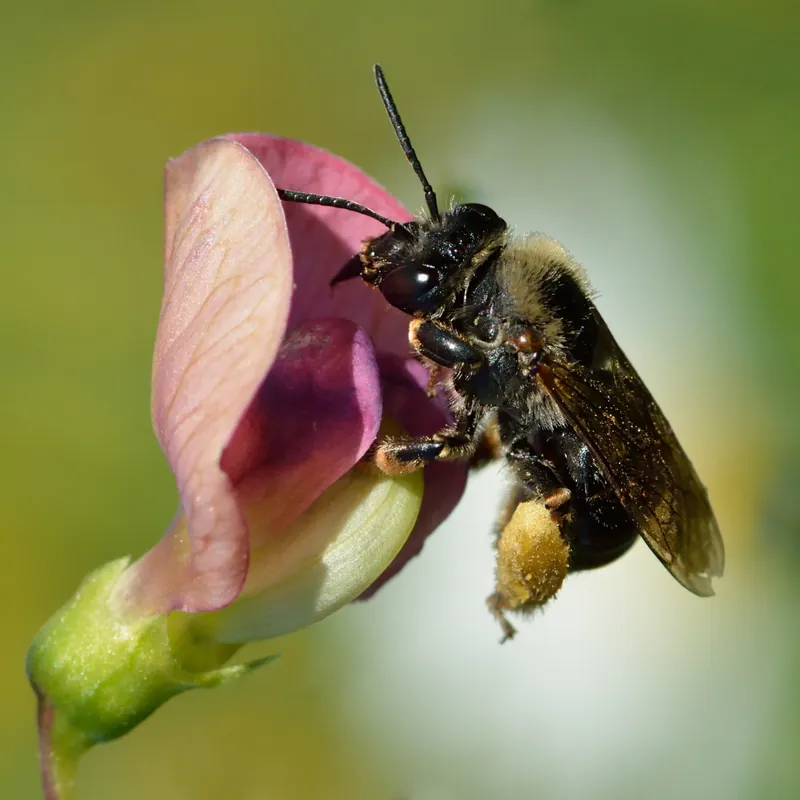
What we know
How to recognise it
Where it lives
Life cycle and colony
Nest
Flowers and food
At two nest aggregations at Gatwick Airport, pea-family pollen was found in every sample from returning females and made up 90 percent of each sample on average.
Observation[2]
Behaviour
Bees and people
In Belgium, males of this bee pollinate the late spider orchid Ophrys fuciflora.
Confirmed fact[3]
Conservation
Where it has been recorded
Each hexagon contains at least one record of Eucera longicornis shared with GBIF: museum specimens, surveys and photographs.
12,070 records
- Sweden3,627
- Switzerland2,741
- Finland1,516
- United Kingdom806
- Norway524
- Germany478
GBIF.org occurrence data for taxon key 1340884, retrieved 2026-10-19. Observation[4]
Records show where the bee has been found and reported, not its full range or its abundance. Isolated points far from the main cluster can be misidentifications, captive or imported bees, or genuine rare finds.
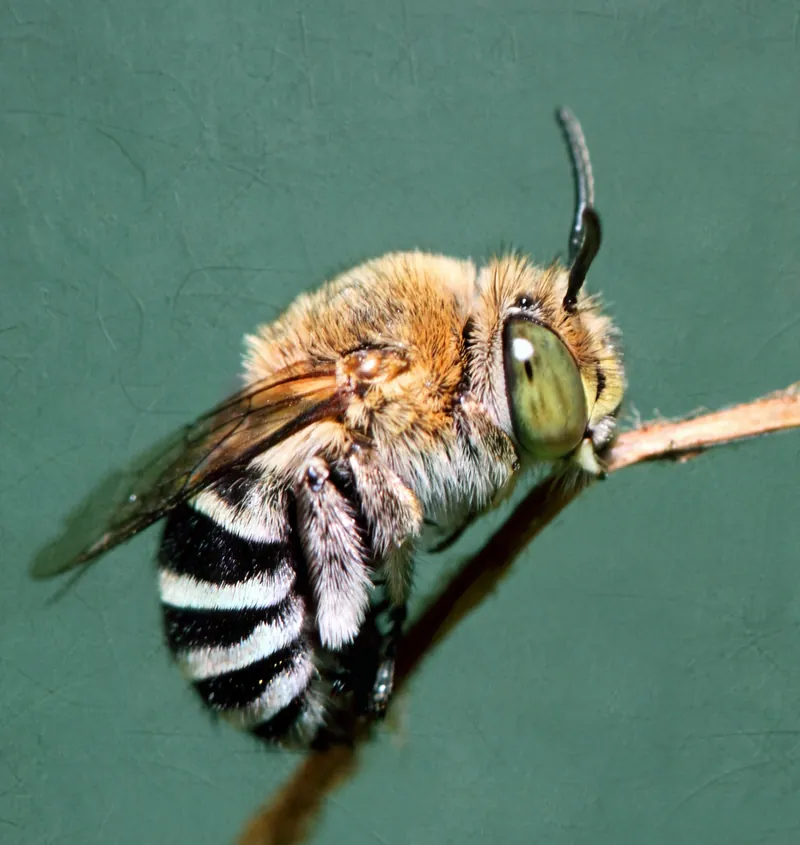
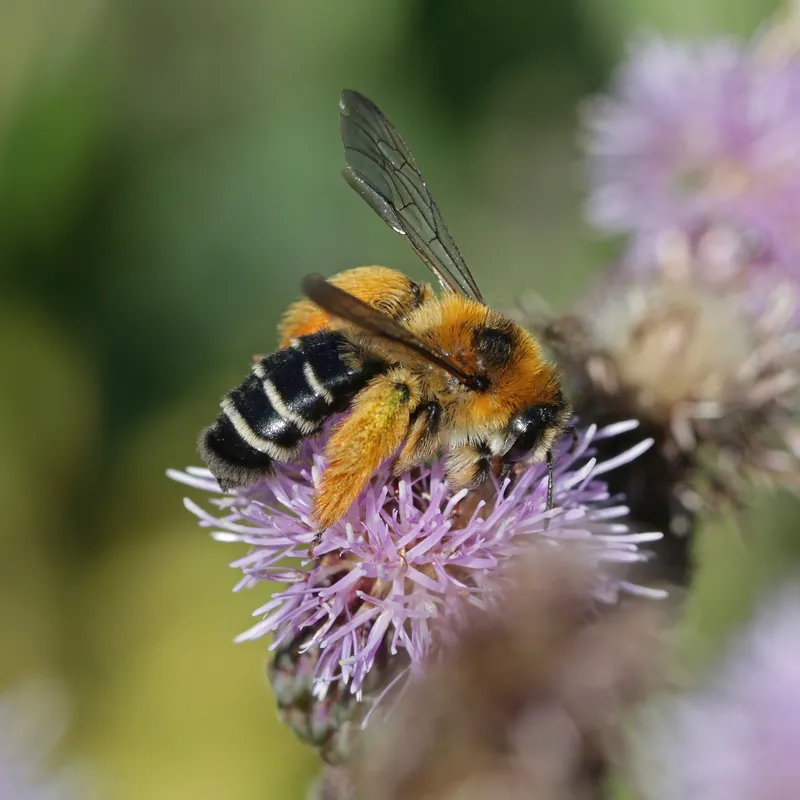
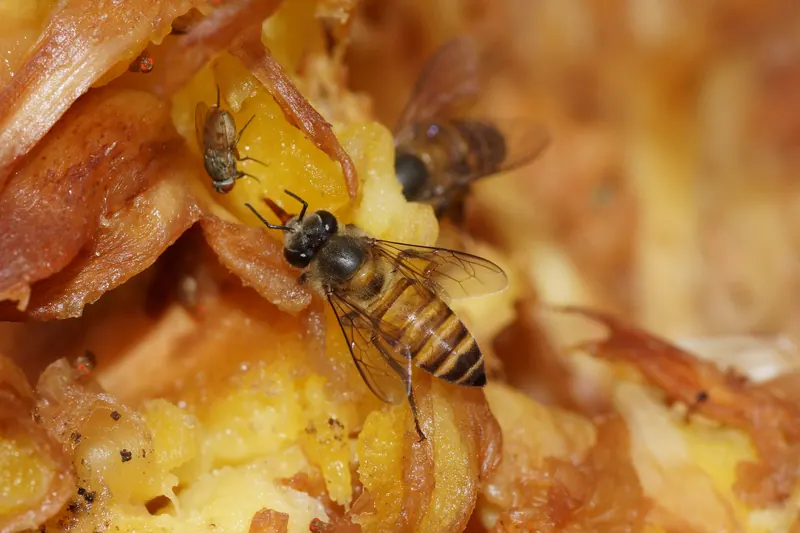
More from this part of the bee family tree
Sources
- Else, G. R. (proofed February 2012). Eucera longicornis (Linnaeus, 1758). Species account, Bees, Wasps & Ants Recording Society (BWARS). Link
- Hennessy, G., Goulson, D. and Ratnieks, F. L. W. (2020). Population assessment and foraging ecology of nest aggregations of the rare solitary bee, Eucera longicornis at Gatwick Airport, and implications for their management. Journal of Insect Conservation 24: 947-960. Link
- Universite de Mons, Laboratoire de Zoologie (no date). Atlas Hymenoptera - Projet Eucera de Belgique - Belgian Eucera Project. Link
- GBIF.org (2026). Occurrence search and density maps for Eucera longicornis, taxon key 1340884. Link
Last checked: 30 October 2026. Every statement on this page was compared with the source it cites. Spotted an error? Report it.