Megachilidae
Osmia lignaria
Blue orchard bee, Orchard mason bee
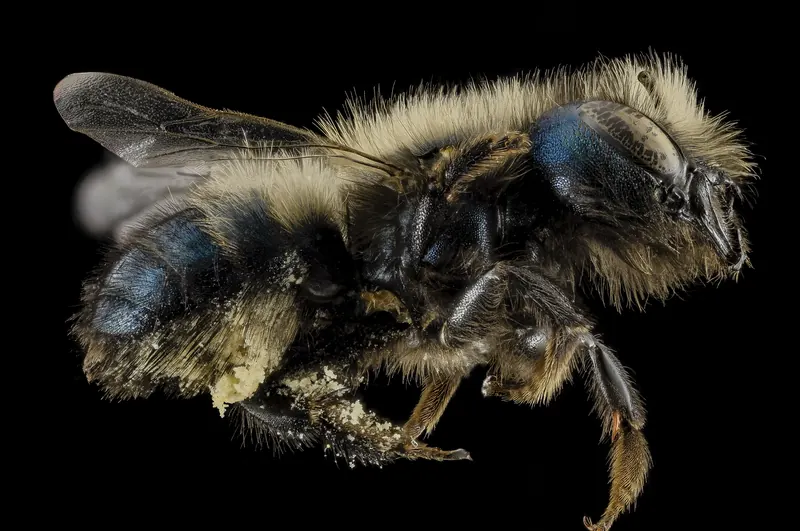
The blue orchard bee is a metallic dark blue, solitary mason bee native to North America. It nests in existing holes, walls its cells with mud, and spends the winter as an adult in its cocoon. Because it prefers fruit tree flowers and forages in cool, cloudy weather, it is managed to pollinate orchards such as almond and apple.
What we know
How to recognise it
Where it lives
Life cycle and colony
Unlike honey bees and bumble bees, it is solitary rather than social.
Confirmed fact[1]It produces only one generation a year.
Confirmed fact[1]It spends the winter as an adult inside its cocoon.
Confirmed fact[2]After emerging in spring, males and nesting females live only about 4 to 6 weeks.
Confirmed fact[2]
Nest
Flowers and food
It visits many wild plants but strongly prefers fruit tree flowers when they are available.
Confirmed fact[1]
Behaviour
Bees and people
As few as 250 nesting females per acre (625 per hectare) are enough to give the most pollination in apple orchards.
Confirmed fact[1]
Where it has been recorded
Each hexagon contains at least one record of Osmia lignaria shared with GBIF: museum specimens, surveys and photographs.
13,010 records
- United States10,859
- Canada1,172
- Mexico10
- Germany5
- ZZ2
- Romania1
GBIF.org occurrence data for taxon key 5039420, retrieved 2026-10-19. Observation[3]
Records show where the bee has been found and reported, not its full range or its abundance. Isolated points far from the main cluster can be misidentifications, captive or imported bees, or genuine rare finds.
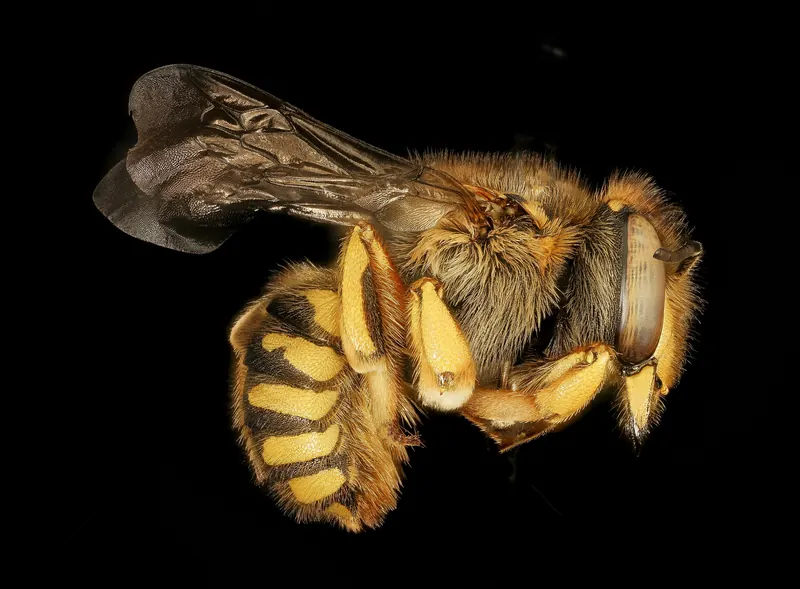
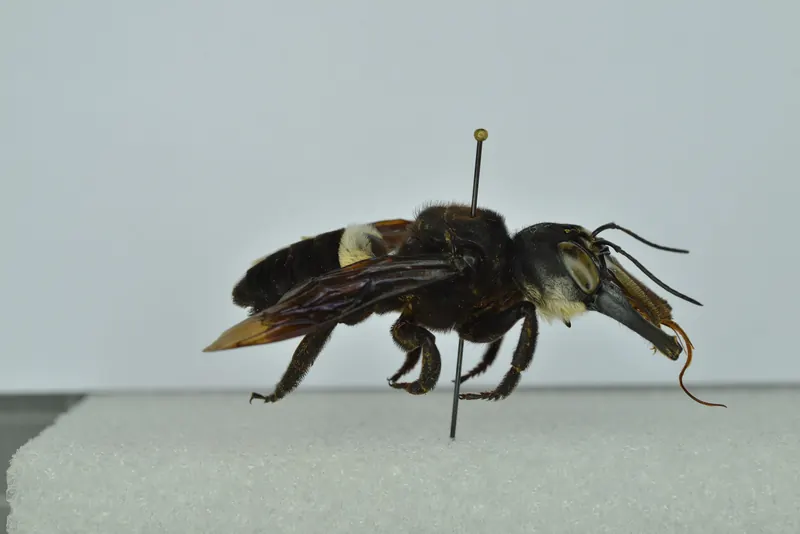
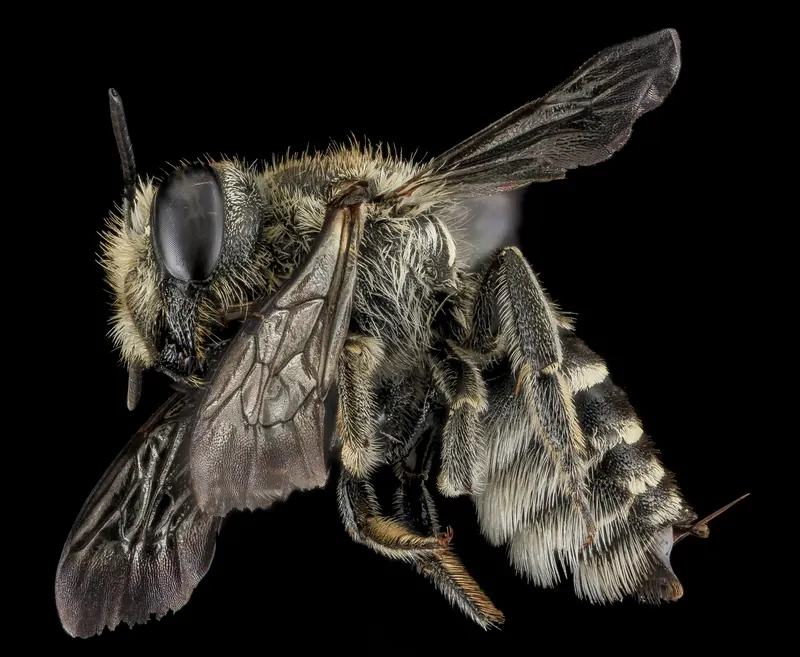
More from this part of the bee family tree
Sources
- Bosch, J. and Kemp, W.P. (2001). How to Manage the Blue Orchard Bee as an Orchard Pollinator. Sustainable Agriculture Network Handbook Series Book 5. National Agricultural Library, Beltsville, MD. Link
- Pitts-Singer, T. (2021). Blue Orchard Bee (Osmia lignaria): Commercial Pollinator for Orchards. Utah State University Extension and Utah Plant Pest Diagnostic Laboratory, Fact Sheet ENT-229-21 (hosted by USDA ARS). Link
- GBIF.org (2026). Occurrence search and density maps for Osmia lignaria, taxon key 5039420. Link
Last checked: 20 October 2026. Every statement on this page was compared with the source it cites. Spotted an error? Report it.