Bee plant, Central Europe
Crataegus monogyna
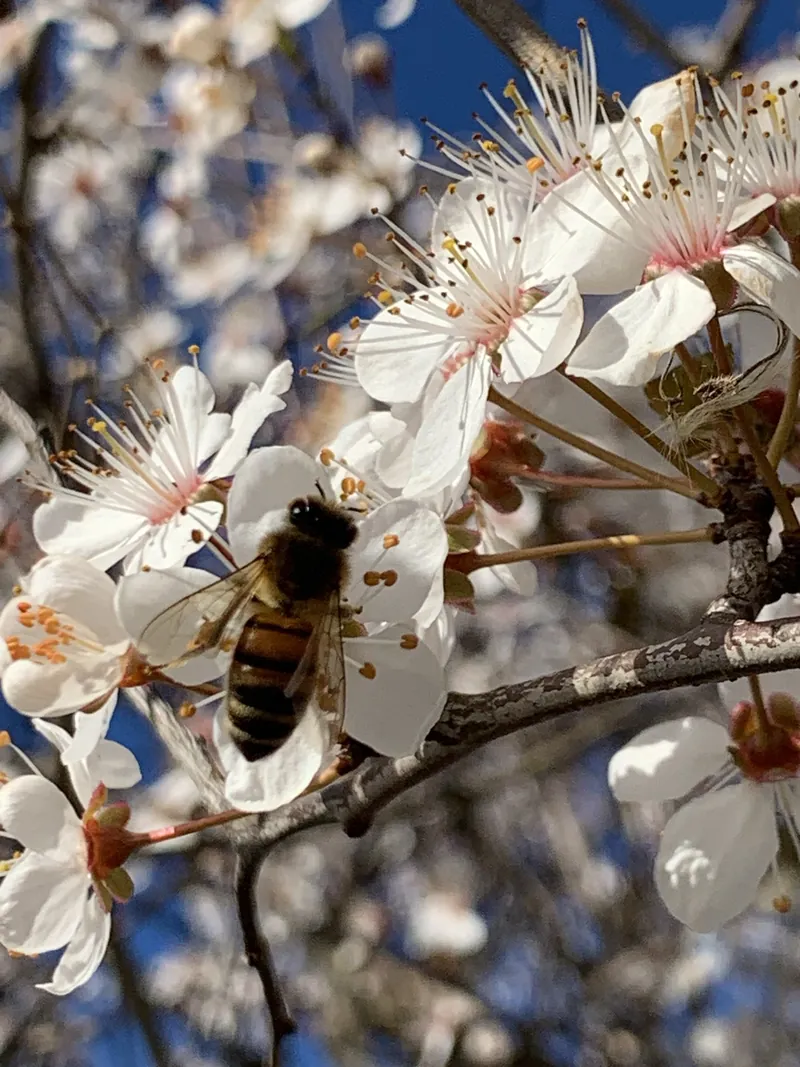
Common hawthorn, Single seeded hawthorn, May
Common hawthorn is a thorny native shrub of hedges, scrub and warm dry margins, flowering white in May and June. It is insect pollinated and the Bavarian LWG rates it moderate for nectar and pollen. A UK study found fruit set fell without insects, and its red fruits feed birds in winter. It was German medicinal plant of 2019.
What we know
How to recognise it
When it flowers
Where it grows
What it offers bees
The Bavarian LWG rates hawthorn 2 for nectar and 2 for pollen on its 1 to 4 scale, noting only moderate bee visits when Robinia competes, and fire blight.
Statistical estimate[3]In a UK hedgerow study, the proportion of hawthorn flowers setting fruit was significantly reduced when insects were excluded with mesh bags.
Confirmed fact[4]The same UK study found hawthorn to be pollen limited, which the authors read as a sign of inadequate pollination service in the study area.
Confirmed fact[4]
People
The UK study notes that fruits of hedgerow plants such as hawthorn are a winter food source for fruit eating birds on farmland.
Confirmed fact[4]Hawthorn was medicinal plant of the year 2019 in Germany; the University of Muenster also notes its suitability for cut or free growing hedges.
Confirmed fact[6]
Sources
- Info Flora (2018+). Crataegus monogyna Jacq.. Online flora of Switzerland (descriptions from Flora Helvetica 2018). Info Flora, Geneva/Bern. Link
- Pladias: Database of the Czech Flora and Vegetation. Taxon data for Crataegus monogyna. Masaryk University Brno et al. Link
- Bayerische Landesanstalt fuer Weinbau und Gartenbau (LWG) (2019). Bienenbaeume (Bienen und Baeume), Veitshoechheim, table of tree species with nectar (N) and pollen (P) ratings 1 to 4. Link
- Jacobs, J. H., Clark, S. J., Denholm, I., Goulson, D., Stoate, C., Osborne, J. L. (2009). Pollination biology of fruit-bearing hedgerow plants and the role of flower-visiting insects in fruit-set. Annals of Botany 104(7): 1397-1404. doi:10.1093/aob/mcp236 Link
- BayCEER, University of Bayreuth. Zertifizierung Artenkenntnis / Qualifizierung Feldbotanik: Crataegus monogyna (species sheet, text R. Marschner). Link
- Universitaet Muenster, Institut fuer Pharmazeutische Biologie und Phytochemie. Arzneipflanze des Jahres 2019: Der Weissdorn (Crataegus spp.). Link
Last checked: 30 October 2026. Every statement on this page was compared with the source it cites.