Bee plant, Central Europe
Prunus avium
Wild cherry, Sweet cherry
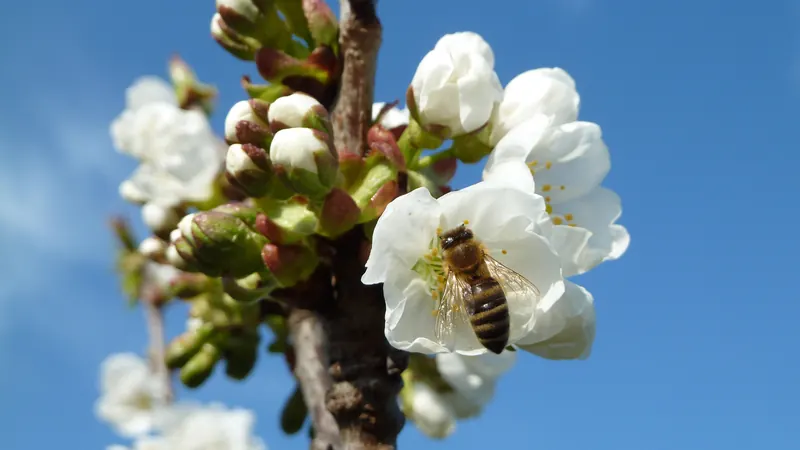
Wild cherry grows in forests and at woodland edges, is widely cultivated as sweet cherry, and flowers in April and May. Its white flowers open before the leaves in umbel like clusters. The Bavarian LWG rates it among the best nectar and pollen trees, and says cherry opens the fruit tree season for beekeepers.
What we know
How to recognise it
When it flowers
Info Flora gives the flowering period of wild cherry in Switzerland as April to May.
Confirmed fact[1]
Where it grows
What it offers bees
In the garden
Sources
- Info Flora. Prunus avium L.. Online species page, Das nationale Daten- und Informationszentrum der Schweizer Flora (text from Flora Helvetica 2018). Link
- Bayerische Landesanstalt für Weinbau und Gartenbau (LWG), Institut für Erwerbs- und Freizeitgartenbau. Bienenbäume. 1. Auflage, Veitshöchheim, April 2019. Link
- Boecking O. (2010) Aktiver Bienenschutz: Verbesserung des Nahrungsangebotes für Bienen. LAVES Institut für Bienenkunde Celle. Link
Last checked: 20 October 2026. Every statement on this page was compared with the source it cites.